
Racism remains a central driver of global HIV epidemics
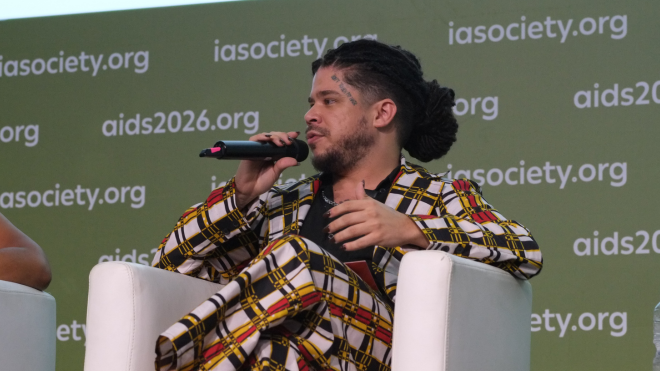
Racism – as a structural system rather than individual prejudice – remains a central driver of HIV inequities worldwide, speakers argued at the 26th International AIDS Conference (AIDS 2026) in Rio de Janeiro, Brazil. Across four decades of medical progress, HIV has continued to fall hardest on Black, Brown and Indigenous communities, who face worse access to care and higher AIDS-related death rates than White people.
Speaking in the host country, activist Thiago Jerohan Albuquerque da Cruz described racism as "a structural organisation of power in our society". Brazil, he said, clings to a "myth of racial democracy" – the idea that "everybody is mixed, and therefore everybody is equal". Yet the data tell a different story: around 45% of Brazilians are Brown or mixed-race and 10% are Black, but White Brazilians still sit at the top of the hierarchy for income, education and health.
Panellists stressed that this is what structural racism means – oppression embedded in social systems, not individual prejudice, producing patterned disadvantage across people's lives, down to shorter life expectancy. Professor E. Roberto Orellana of the University of Washington tied it to colonialism and to the near-invisibility of Indigenous people in the data: "It's part of that settler colonialism project that's still going on where Indigenous people simply do not exist."
Dr Paula Luz of the Oswaldo Cruz Foundation (FIOCRUZ) put figures to these patterns. In Brazil in 2024, Black and mixed-race people made up 45% of pre-exposure prophylaxis (PrEP) users but 64% of new HIV cases – "the people accessing PrEP are not the people acquiring HIV", she said. An analysis of more than 28 million Brazilians found that being Black raised the risk of HIV and AIDS-related death – Black women were twice as likely to die as White women – and that adding poverty and low education widened the gap to more than sevenfold. The driver, she stressed, is racism, not race.
Solutions, Luz argued, must be equally structural – but access to health care alone is not enough. Tackling poverty directly may have a greater impact: Brazil's Bolsa Família cash-transfer programme, studied across more than 22 million people, cut AIDS cases by 41% and AIDS-related deaths by 39% between 2007 and 2015, with the strongest effects among the poorest. The most powerful HIV intervention, Luz concluded, may not be an HIV intervention at all.
Read this news story in full on aidsmap.com.
Watch our interview with Thiago on YouTube.
Advanced HIV disease increasingly affects people the health system has lost
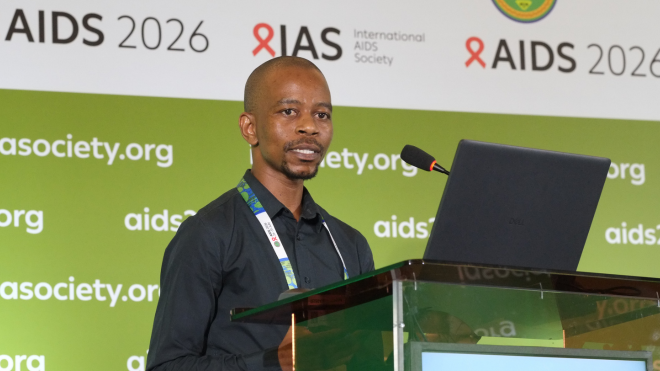
Advanced HIV disease is increasingly affecting people whom health services have already diagnosed, treated and then lost, the conference heard. Three South African studies showed that treatment interruption is now a leading driver of advanced HIV disease, sharply raising the risk of tuberculosis and death, as the tools to detect and prevent it become increasingly scarce.
Professor Graeme Meintjes of the University of Cape Town reported that by 2025, 65% of South Africans starting or restarting treatment with a CD4 count below 200 were returning after an interruption, not starting for the first time. The stakes are clear: Haroon Moolla, also of the University of Cape Town, found people in the Western Cape were ten times more likely to develop TB while off treatment than on it. Even after resuming treatment and re-suppressing the virus, their TB risk stayed 54% higher, prompting Moolla to warn that health workers should watch for TB well beyond the point of re-engagement.
Interruption does lasting harm because CD4 counts fall far faster than they recover: in the SMART trial of planned treatment breaks, counts dropped by around 200 within four months of stopping, and recovery is poorer with each restart. In data from the South African private health sector, Sanele Mbeje of CAPRISA found those starting treatment with advanced HIV disease were nearly five times more likely to die, with deaths concentrated in the first six months.
Yet the means to find and protect these patients are eroding. Although the 2026 World Health Organization (WHO) guidelines still recommend CD4 testing to identify advanced HIV disease, the tests are leaving the market, and CD4 testing across six southern African countries fell by 35% between 2024 and 2025. Mbeje found that 45% of his patients had no CD4 result recorded when they started treatment. Preventive treatment is faltering: even in one clinical trial, co-trimoxazole – recommended for everyone with advanced HIV disease – reached under 70% of participants by six months. "It's probably even worse in routine care," Meintjes said.
The message from all three speakers: advanced HIV disease is now as much about keeping people in care as treating them once they arrive – and CD4 testing must be prioritised at the start of treatment so those at risk are not missed.
Read this news story in full on aidsmap.com.
Simpler tests could help find the people advanced HIV care misses
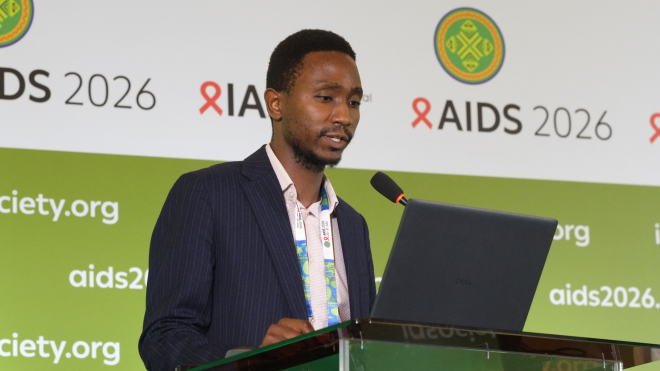
As CD4 and opportunistic infection testing come under strain in many countries, two studies at AIDS 2026 showed how simple, point-of-care tests could still reach people with advanced HIV who might otherwise be missed – building on WHO guidance that everyone with HIV should have a CD4 test at diagnosis, and screening for tuberculosis and other infections if their count is low.
In Malawi, where an estimated 60,000 people were living with advanced HIV in 2023, Dr John Fly Phiri of the country's Ministry of Health analysed programme data from July 2024 to September 2025. Among 76,415 people newly diagnosed or returning to care, 82% were screened for advanced HIV – but only around half of those screened received a CD4 test, and few went on to receive all the recommended tests for tuberculosis and cryptococcal infection. To close this gap, Malawi is rolling out a rapid, point-of-care CD4 test that needs no laboratory or electricity.
In Latin America and the Caribbean, Dr Antonio Camiro-Zuñiga of Mexico's National Cancer Institute presented a pooled analysis of eight national studies. Each used a standard package of rapid, point-of-care tests, including one for histoplasmosis, a fungal infection commonly diagnosed in the Americas. Of 2143 eligible people, 28% tested positive for at least one infection – most of which would otherwise have been missed until they led to hospital admission. TB-LAM, a urine test for tuberculosis, was especially valuable: "TB-LAM tripled case finding in this study," Dr Camiro-Zuñiga told the conference. The stakes were high: 16% of those who tested positive died within 30 days, compared with 7% of those who tested negative.
Both studies point to the same conclusion: making point-of-care diagnostics more widely available could substantially improve care for people with advanced HIV.
Read this news story in full on aidsmap.com.
Syphilis and chlamydia fall after doxyPEP guidance in Australia – but not gonorrhoea
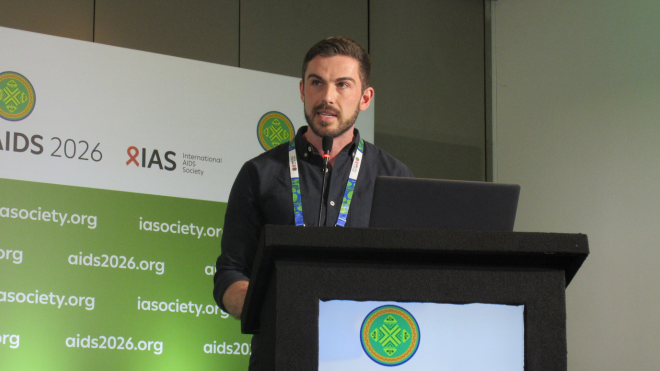
Rates of syphilis and chlamydia fell substantially among gay and bisexual men in Australia after national doxyPEP guidance was introduced, though gonorrhoea did not follow suit, Dr Michael Traeger of the Burnet Institute in Melbourne told the conference. Drawn from a national network of sexual health clinics rather than a few early-adopter sites, the findings suggest doxyPEP's real-world benefits are holding up outside clinical trials.
Australia was among the first countries to recommend doxyPEP, issuing prescribing guidance for men who have sex with men in October 2023. In a 2024 study, 15% of men who have sex with men reported using doxyPEP.
Traeger's team analysed records from the ACCESS clinic network, comparing sexually transmitted infection (STI) diagnoses among gay and bisexual men before the guidance (January 2022 to April 2023) and after it (October 2023 to October 2025).
Compared with what the pre-guidance trend predicted, there were an estimated 55% fewer syphilis diagnoses and 36% fewer chlamydia diagnoses after the guidance. Gonorrhoea, by contrast, showed an 11% rise that was not statistically significant. The declines were not explained by changes in testing, held across higher-risk groups, and mirrored earlier findings from San Francisco and Seattle.
"This is the first time, other than COVID, that we've really seen these declines in more than 10 or 15 years," Traeger said.
Because syphilis fell earlier than chlamydia, Traeger suggested doxyPEP may also act partly as 'treatment as prevention', with prompt antibiotic use limiting onward transmission from recent infections. Gonorrhoea remains the gap: doxyPEP works less well against it, partly because of existing antibiotic resistance – a problem that keeps it an urgent public health concern.
Read this news story in full on aidsmap.com.
AIDS 2026 webinar
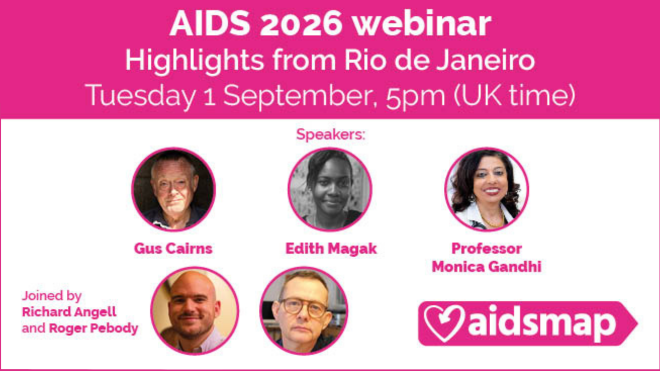
On 1 September from 5-6pm (UK time), aidsmap is holding a special one-hour webinar bringing together key insights, emerging evidence and important discussions from AIDS 2026.
aidsmap writers Gus Cairns and Edith Magak, along with Professor Monica Gandhi from the University of California San Francisco, will each present their personal highlights from the conference.
Could leronlimab make stem-cell transplant cures of HIV more feasible?
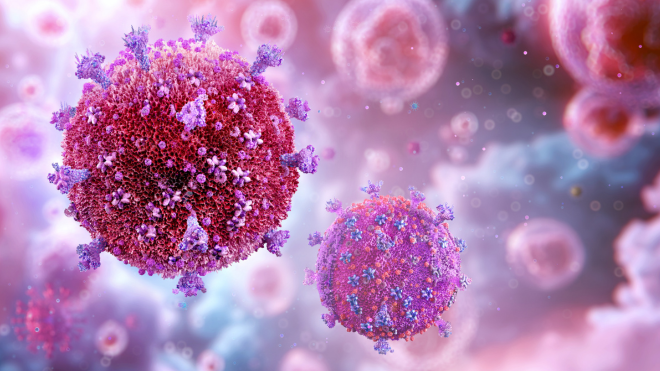
Stem-cell transplants have cured a small number of people with HIV, but almost always using rare donors whose cells lack the CCR5 co-receptor that HIV uses to enter cells. At the conference, Professor Jonah Sacha of Oregon Health and Science University suggested that leronlimab – an antibody that blocks CCR5 – might one day allow such cures using ordinary donors, though the work so far is only in monkeys.
Cures have usually been credited to the donor's CCR5-negative cells being resistant to infection. Sacha argued that the more important factor may be allogeneic immunity – immune reactions during the transplant that clear the body's hidden reservoir of HIV-infected cells. That a few people have been cured using donors who did have CCR5 lends support to the idea that CCR5-negative donors may not be essential.
Because HIV can occasionally cross into donor cells during the vulnerable period when they replace the recipient's own cells, Sacha's team tested leronlimab as a 'shield' for the incoming cells. In one experiment, all six monkeys given leronlimab stayed free of SHIV – the monkey equivalent of HIV – despite repeated exposure, while all six untreated animals became infected.
In a transplant using CCR5-positive cells, one monkey began leronlimab two weeks beforehand, and its donor was primed in advance with some of the recipient's CD4 cells to build an early immune response. The monkey had no detectable SHIV in its blood or tissues by four months. Around 100 days after the transplant she developed graft-versus-host disease, in which the donor's cells attack the recipient's remaining cells – including any that still harbour HIV. Antiretroviral treatment was withdrawn 450 days after the transplant, and some 135 days later there is still no sign of the virus returning.
A human trial is planned to test leronlimab as an added therapy for people with HIV who need a stem-cell transplant – for example to treat leukaemia. If it works, it could remove the need to search for scarce CCR5-negative donors, though stem-cell transplants remain risky and would only ever suit the few people who require one.
Read this news story in full on aidsmap.com.
CD4 mimetics could help the immune system attack HIV-infected cells
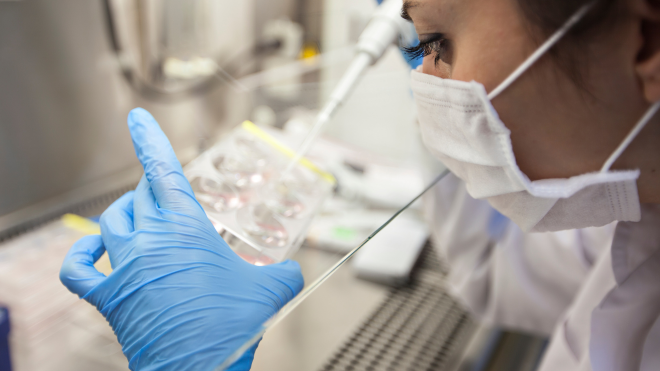
A new class of drugs called CD4 mimetics could make HIV-infected cells visible to the immune system, helping it to destroy them, Étienne Bélanger of the University of Montréal told the conference. The approach could form part of a future strategy to cure HIV or achieve lasting remission off treatment.
The immune system normally clears viruses such as flu by tagging infected cells with antibodies that mark them for destruction. HIV evades this: it strips the CD4 molecule from the surface of infected cells, which keeps its own surface 'spike' protein folded shut and hidden from antibodies. The body therefore struggles to find and kill infected cells.
CD4 mimetics are small molecules that bind to that spike and force it open, exposing it to antibodies. In laboratory experiments, Bélanger's team found that one such compound, CJF-III-288, made infected cells much easier for antibodies to recognise and for immune cells to engulf and destroy. Adding interferon-beta, an immune signalling chemical, boosted the effect further.
The work is at an early, laboratory stage, and Bélanger stressed that CD4 mimetics would probably serve as an accessory to other tools – such as broadly neutralising antibodies and vaccines – rather than a cure on their own. Even so, he said, it is a step towards provoking an immune response to HIV as effective as those the body mounts against other viruses.
Read this news story in full on aidsmap.com.
Chemsex is everywhere, but often invisible and unaddressed
Chemsex – sex enhanced by drugs – has become a global phenomenon among gay and bisexual men, transgender women and other gender- and sexually-diverse people, yet it often falls between the cracks of drug services and HIV programmes, a session at the conference heard. Presenters from three continents described interventions in varied settings – all naming methamphetamine as the main drug – but the fullest account came from South Africa.
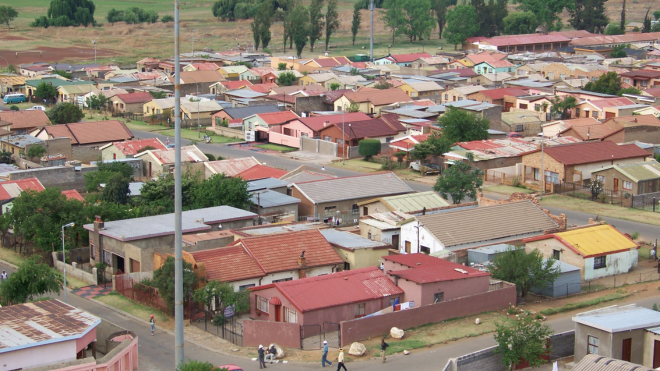
David Nel of the community organisation OUT LGBT Well-being described a network of chemsex houses his team stumbled upon in Soweto, alerted by unusually high HIV diagnosis rates among the men who used them. These were the typical small matchbox houses built under apartheid, where, from mid-morning, up to 20 men might gather to take drugs and have sex, with little privacy.
OUT reached 127 users. Their average age was 36; most had not finished secondary school and very few were employed. More than half had HIV, but only 31% knew it, and of those, only 42% were taking antiretroviral treatment regularly. Psychological distress was widespread: around half had anxiety or depression, 54% showed signs of psychosis, and 28% had suicidal thoughts.
With funding from the Elton John AIDS Foundation, OUT ran a peer-led programme from January 2024 offering group cognitive behavioural therapy, counselling, skills classes and biomedical services including antiretroviral treatment. By March 2025, symptoms of anxiety, depression and suicidal thinking had fallen by around a third and signs of psychosis by 63%, harmful drug use had dropped by 35%, and regular treatment use among those with HIV had risen to 83%.
Nel argued that OUT's experience showed the value of a peer-led service bringing care as close as possible to clients, aimed at genuine epidemic control rather than only building self-esteem or skills. But when the funding ended in March 2025 and users had to switch to government clinics, regular treatment use fell back from 83% to 68%.
Read this news story in full on aidsmap.com.
Lean people with HIV can still develop fatty liver disease
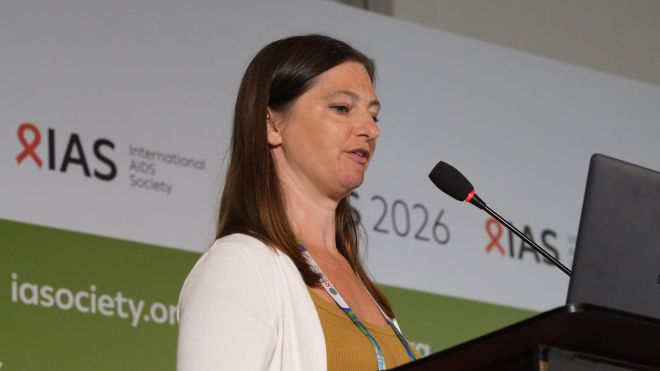
Lean people with HIV – those with a normal body mass index (BMI) – can still develop fatty liver disease as severe as that seen in heavier patients, Florence Bascombe, a senior research nurse at University College London, told the conference. The findings suggest that screening based on body size alone may miss people with HIV who are at risk.
Fatty liver disease – a build-up of fat in the liver that can progress to scarring, cirrhosis and cancer – is usually linked to obesity, but not always. Bascombe's team reviewed records from a large London HIV clinic between 2019 and 2025, using a non-invasive scan to assess the liver. Of 391 people with HIV and fatty liver disease, 57 (15%) were classed as lean. These patients were older and had healthier metabolic profiles overall, yet their markers of liver damage, including fibrosis, were no better than those of overweight or obese patients.
Lean fatty liver disease was most strongly associated with a past history of lipodystrophy – the abnormal fat distribution once common with older HIV drugs – suggesting it may arise through different biological pathways rather than simply being obesity driven. Bascombe concluded that "normal BMI does not exclude clinically relevant liver disease in HIV", and that clinicians should look beyond weight to measures such as waist circumference and body composition.
Read this news story in full on aidsmap.com.
Friends of aidsmap
aidsmap turns complex HIV research into accurate, independent and accessible information, reaching people living with HIV, healthcare professionals, and communities worldwide.
By giving a regular donation and becoming a Friend of aidsmap, you will play a vital role in aidsmap’s next chapter. From conference reporting to bringing on a new generation of writers in the Global South, your support gets the latest HIV science to healthcare providers, people living with HIV and the HIV voluntary sector.
When you sign up as a Friend of aidsmap, we’ll send you a unique pink aidsmap badge.