
Lean people who are classified as having normal weight according to body mass index (BMI) may still develop fatty liver disease and its complications, and those living with HIV may be at higher risk, according to study findings presented last week at the 26th International AIDS Conference (AIDS 2026) in Rio de Janeiro.
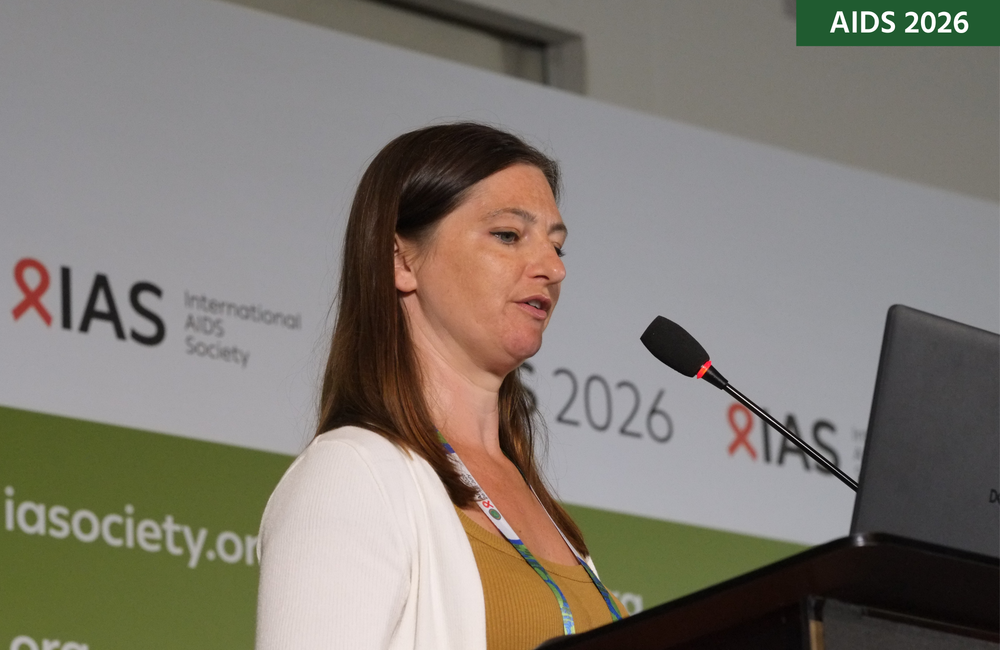
“Normal BMI does not exclude clinically relevant liver disease in HIV,” said Florence Bascombe, a senior research nurse at University College London.
“Reliance on body size alone may miss people at risk, highlighting the need for better phenotyping and more nuanced metabolic assessment in HIV care.”
Steatotic liver disease (SLD) is the recently adopted name for fat accumulation in the liver. It includes metabolic dysfunction-associated steatotic liver disease (MASLD), alcohol-related liver disease (ALD) and liver disease attributable to both metabolic factors and alcohol (MetALD). Over time, the buildup of fat in the liver, or hepatic steatosis, can lead to inflammation, fibrosis, cirrhosis and liver cancer. Now that hepatitis B can be prevented with a vaccine and hepatitis C can be cured with antiviral therapy, SLD is responsible for a growing share of advanced liver disease worldwide.
The new terminology recognises that SLD is a metabolic condition. It often occurs alongside obesity, but that’s not always the case. Studies of the general population find that around 10% of people with normal or low weight may have SLD, and some research suggests this may rise to 25% among people living with HIV. Focusing on BMI can underestimate the prevalence of fatty liver disease in lean people with or without HIV. What’s more, lean SLD has been linked to increased mortality and liver-related events despite fewer metabolic abnormalities.
To learn more about fatty liver disease in people with HIV, Bascombe and colleagues compared clinical characteristics of HIV-positive people with SLD by BMI category. This cross-sectional analysis used clinical data collected at a large HIV service in central London between 2019 and 2025.
SLD was determined using transient elastography, or FibroScan, a non-invasive ultrasound imaging method that estimates both steatosis (controlled attenuation parameter) and fibrosis (liver stiffness measurement). Participants were classified as having either lean (BMI <25) or non-lean SLD. (A BMI of 25 is the traditional threshold for overweight, while 30 is the cut-off for obesity.) The researchers also collected data on liver disease biomarkers, HIV-related factors and cardiometabolic health.
Among 391 people with both HIV and fatty liver disease, 57 (14.6%) were classified as having lean SLD. Compared to people whose BMI was 25 or higher, lean people with SLD were older (median 58 vs 54 years) and generally had more favourable cardiometabolic profiles. Nonetheless, lean and non-lean people with SLD had similar markers of liver disease severity, including liver fibrosis scores.
“Although lean participants appeared metabolically healthier and had slightly less hepatic fat accumulation, we found no evidence that they had a lower burden of clinically relevant liver disease,” Bascombe said.
Of note, hepatitis B co-infection was more common among lean people with SLD in a single-factor analysis. In fact, people with lean SLD were more than twice as likely to have hepatitis B than those with overweight or obesity (19.3% vs 8.1%).
Lean SLD was most strongly associated with a history of lipodystrophy, or abnormal body fat distribution. While 10.5% of people with lean SLD had ever had lipodystrophy, this fell to 2.1% among those with overweight or obesity.
Once a hallmark of HIV, people with lipodystrophy may have excess abdominal fat alongside fat loss in the face and limbs (lipoatrophy). Although its causes are not fully understood, some early antiretroviral drugs – in particular thymidine analogues such as AZT (Retrovir) and early protease inhibitors – were linked to either lipoatrophy or mixed fat gain and loss. In this analysis, lean SLD was associated with use of tenofovir alafenamide (a component of several combination pills including Descovy and Biktarvy).
“Collectively, these findings raise the possibility that lean SLD may not simply represent obesity-driven disease occurring at a lower BMI, but instead may arise through different pathways leading to SLD in people with HIV, including altered fat distribution, adipose dysfunction or potentially mitochondrial mechanisms,” the researchers suggested.
These findings show that screening strategies based on BMI and metabolic factors may miss a subgroup of people at risk for fatty liver disease. This has implications for clinical management, including prescribing of GLP-1 weight-loss medications. One of these, semaglutide (Wegovy) was approved in the US last year for treatment of metabolic dysfunction-associated steatohepatitis (MASH), the advanced stage of MASLD.
Recognising this discrepancy, the field is moving away from reliance on BMI alone and toward including body composition measures such as waist circumference, waist-to-height ratio, body roundness index and body fat percentage.
Bascombe F et al. Lean steatotic liver disease (SLD) in people living with HIV is associated with preserved cardiometabolic profiles but comparable liver disease severity. 26th International AIDS Conference, Rio de Janeiro, abstract OAB0905, 2026.