
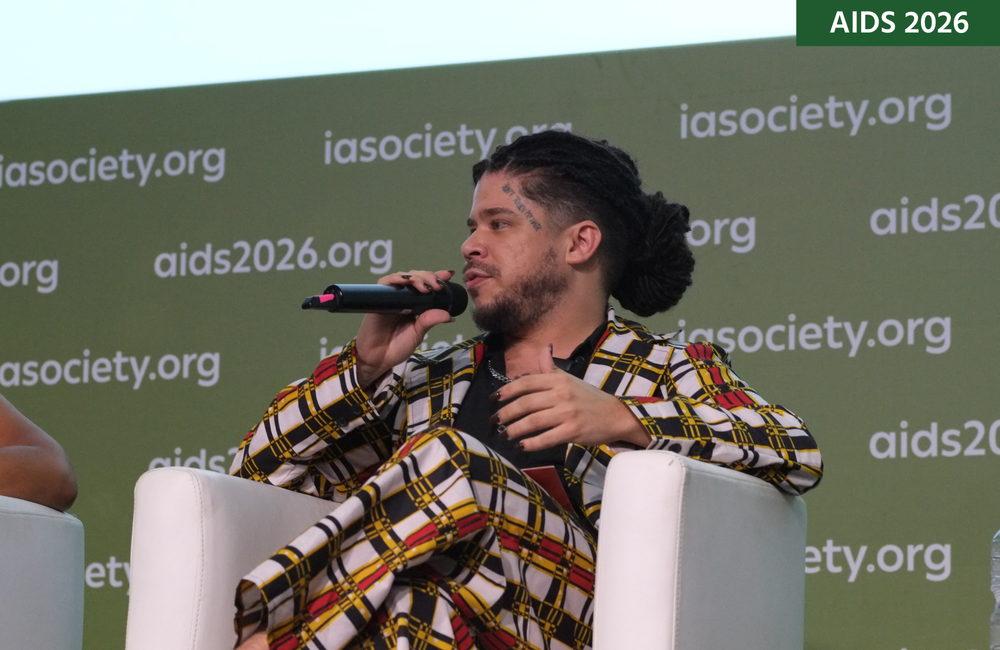
At the 26th International AIDS Conference (AIDS 2026) held in Rio de Janeiro last week, a special session was devoted to racism as a driver of HIV outcomes.
Globally, HIV disproportionately impacts Black, Brown and Indigenous communities, who have inequitable access to prevention and treatment and higher rates of death from AIDS-related complications when compared to White people. This has been the case since the beginning of the epidemic and has persisted over four decades of new treatments, prevention modalities and innovations in care.
“Racism is a structural organisation of power in our society,” panellist Thiago Jerohan Albuquerque da Cruz, Project Advisor at Gestos in Recife, Brazil, said.
Cruz explained that Brazil has a “myth of racial democracy” or meritocracy among races. “Everybody is mixed, and therefore everybody is equal,” he said, summarising the myth. However, data points to a clear stratification among racial groups for factors such as income, education and health outcomes.
Around 45% of Brazilians are considered Brown or Mixed (Pardo), 10% are Black (Preto), with smaller numbers of Asians and Indigenous people. White (Branco) people still occupy the top of the hierarchy when it comes to several life outcomes, despite the myth of racial democracy.
“It’s a system of power and oppression, of advantage and disadvantage,” Dr Oni Blackstock, Executive Director of Health Justice in the US, another of the panellists, said when defining structural racism. “It’s not just about racial prejudice.”
This distinction is important: when many hear the word ‘racism’, they think of individual acts of racial discrimination, such as the use of slurs or acts of aggression against people of colour. However, structural racism is about systematic and structural forms of oppression that are present in social systems ranging from education to housing to health. The effects are patterned, consistent and appear over the life course of impacted communities – extending to reduced life expectancy.
“We can’t talk about racism without talking about colonialism, and how those two things intersect,” Professor E. Roberto Orellana, University of Washington, another panellist, added. He highlighted the lack of data on Indigenous people globally: “We don’t have very good data… It’s part of that settler colonialism project that’s still going on where Indigenous people simply do not exist.”
Racism in HIV outcomes
In a plenary on structural drivers of HIV outcomes, Dr. Paula Luz, from Fundação Oswaldo Cruz (FIOCRUZ) in Brazil, shared some global data on racism and other structural determinants of inequity in the HIV response.
Luz highlighted PrEP uptake in Brazil. In 2024, Black/Pardo people made up 45% of all PrEP users, whereas they made up 64% of new HIV cases. In the ImPrEP study, when compared to White people, people of colour had more early loss to follow-up, lower adherence, lower persistence and higher HIV incidence.
“The people accessing PrEP are not the people acquiring HIV,” Luz noted.
She also highlighted research using data from over 28 million Brazilians aged 13 and older that considered the intersecting effects of race, ethnicity, wealth, education and gender on HIV incidence and death from AIDS-related complications. When considering Black race as a factor on its own, there was an increased odds of HIV incidence and deaths among both women and men, but higher for women. For instance, death from AIDS-related complications was over two times as high among Black women than it was for White women.
However, when considering the combined effects of intersections such as being Black, poorer and having lower educational attainment, these odds spiked sharply, with a much clearer distinction between all groups. Using death from AIDS-related complications among Black, poorer women with lower education as an example, this jumped to over seven times the odds when compared to White women, wealthier people and those with higher educational attainment.
However, it’s important to point out that racism – not race – is a determinant of HIV outcomes. The reason for these clear patterns at the population level is due to structural patterns in societies.
Ways forward
Luz also discussed potential solutions. As racism is structural in nature, these solutions need to be much broader than individual-level interventions. In research from the US, a cost-effectiveness analysis showed how PrEP equity could be increased during scale-up by changing the racial and ethnic distributions of users – all while keeping the same number of overall PrEP users. Researchers compared a proportional approach, based on existing service levels, and an equity approach, where PrEP would be allocated based on need, in six US cities with high HIV incidence.
Using Atlanta’s 2020 status quo as an example, most PrEP users were White, with much smaller numbers of Black and Hispanic users. If this pattern held stable when scaling up PrEP use, HIV infections would decrease by 34%. However, if PrEP scale-up matched the needs of those groups with higher numbers of HIV acquisitions – more Black and Hispanic individuals receiving PrEP, with fewer White individuals receiving it – this study predicted a doubling of that decrease, to around 69% fewer new HIV acquisitions. This dramatic result simply arises from taking a more equitable approach. In both the proportional and equity approaches, there would be the same number of PrEP users after scale-up, but the racial/ethnic proportions would differ.
In the US, while Black people make up 13% of the population, they account for around 40% of all new HIV diagnoses. When combining sexuality and race, this jumps sharply, with Black gay and bisexual men accounting for most new HIV diagnoses. Thus, interventions that prioritise more equitable access are crucial to ending the epidemic.
However, Luz showed that access to healthcare alone is not enough. In Brazil, universal no-cost healthcare has been available since 1996 and PrEP has been available since 2017. But the stubborn pattern of racial inequities in both HIV incidence and deaths from AIDS-related complications has remained stable.
Another promising solution is conditional cash transfers. The Brazilian Programa Bolsa Familia is a nationwide poverty-reduction intervention for poor households with children or pregnant women. It granted cash transfers to families who have attended antenatal care visits, received immunisations, and could show that children were attending school.
From 2007 to 2015, among over 22 million Brazilians, while poverty reduced by 15% and extreme poverty reduced by 25%, there were also clear and dramatic effects on HIV outcomes: AIDS cases were reduced by 41%, while death decreased by 39%. There was a clear gradient, indicating the importance of structural interventions: effects were much stronger among those with more extreme poverty and gradually weakened as income increased, having no effect among those with higher incomes.
“These results demonstrate that universal, no cost healthcare access alone isn’t sufficient,” Luz said. “Socioeconomic support is essential for sustaining HIV care engagement. Indeed, a powerful HIV intervention may not be an HIV intervention at all, but rather a social protection programme that reshapes the economic environment in which HIV vulnerabilities are embedded.”
“The HIV response is unequal by design and not by accident,” Luz concluded.
To combat racism, Blackstock offered simple advice: each person thinking about how they can influence anti-racism in the systems they inhabit. She emphasised supporting organisations doing anti-racism work and finding ways to redirect resources to marginalised communities.
Cruz added to this: “We have the challenge that we need to create these spaces [to talk about racism]. He spoke about the need to draw more attention to racism and critiqued the lack of opportunities to do so at the conference, beyond the panel.
Racism as a driver of HIV: From lived experience to structural change. 26th International AIDS Conference, Rio de Janeiro, special session SS02, 2026.
View the details of this session on the conference website.
Mendes Luz P. Inequities in the HIV response: Leaving no one behind. 26th International AIDS Conference, Rio de Janeiro, plenary PL0304, 2026.
View the details of this session on the conference website.
Correction: This article was amended on 18 August 2026. A study mentioned by Dr Paula Luz involved 28 million Brazilians, not 28 Brazilians.