
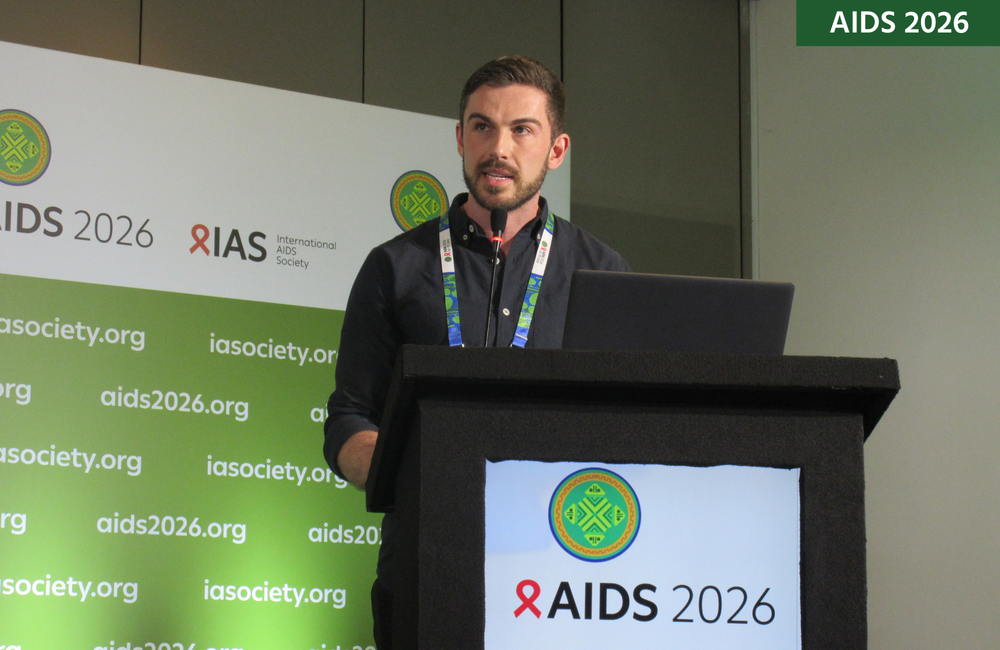
Rates of syphilis and chlamydia fell substantially among men who have sex with men after the introduction of doxyPEP guidance in Australia, though there was not a corresponding decline in gonorrhoea, according to a report last week at the 26th International AIDS Conference (AIDS 2026) in Rio de Janeiro. These findings, drawn from a national network of sexual health clinics rather than a handful of early-adopter sites, show that the benefits of antibiotic post-exposure prophylaxis seen in clinical trials are holding up in the real world, although more effective prevention tools are still needed for gonorrhoea.
“This is the first time, other than COVID, that we've really seen these declines in more than 10 or 15 years,” said presenter Dr Michael Traeger from the Burnet Institute in Melbourne.
DoxyPEP involves taking a single dose of the oral antibiotic doxycycline within 72 hours after sex. Clinical trials have demonstrated its effectiveness, and some cities – such as San Francisco – have reported real-world outcomes. But there is little population-level data at the national level. Traeger and colleagues explored population-level changes in bacterial STIs among gay and bisexual men in Australia as doxyPEP guidance emerged.
Australia was among the first countries to issue guidance recommending doxyPEP, but doxycycline is cheap and readily available there, and some doctors were already prescribing it off-label and some gay men were obtaining it from informal sources.
Sexual health experts released an interim position statement in April 2023 after results from the DoxyPEP trial were published in The New England Journal of Medicine. That study enrolled gay and bisexual men and transgender women in San Francisco and Seattle who were living with HIV or on HIV pre-exposure prophylaxis (PrEP). At the 2022 International AIDS Conference, Dr Annie Luetkemeyer of the University of California San Francisco reported that participants who were randomly assigned to use doxyPEP saw about a 65% decrease in the three STIs overall. This was mainly driven by steep drops in chlamydia and syphilis, ranging from 74 to 88%; gonorrhoea fell by a more modest but still statistically significant 55%.
With this data in hand, awareness of doxyPEP grew in Australia, and more clinicians and community members started promoting the morning-after pill. That October, Australian clinicians published a doxyPEP consensus statement, which included the first prescribing recommendations for men who have sex with men.
To assess changes in STIs over time, Traeger’s team looked at records from ACCESS, a national network of clinics across the country that monitor and provide care for STIs and blood-borne viruses. The study population consisted of gay and bisexual men (age 16 and up) who sought care at 29 clinics. Of these, 78,560 had at least one STI test and 27,725 had at least one STI diagnosis. The analysis included 5198 cases of syphilis, 27,190 cases of chlamydia and 27,301 cases of gonorrhoea. The researchers compared diagnoses during the pre-guidance period (January 2022 to April 2023) and post-guidance period (October 2023 to October 2025).
DoxyPEP prescriptions rose steadily after the guidance was released, Traeger said. A 2024 survey of more that 2000 men who have sex with men found that 15.4% said they had ever used doxyPEP and 14.6% had done so during the past year.
Traeger reported that syphilis saw a steep drop between April and October 2023, then stabilised to a long, slow decline over the next two years. After the release of the doxyPEP consensus statement, the researchers estimated that there were 2973 fewer syphilis diagnoses than expected based on the pre-guidance trend, reflecting a 55% reduction.
Chlamydia, which was also on the rise before the guidance, stabilised between April and October 2023 and then began to decline more steeply. Traeger’s team estimated that there were 7604 fewer chlamydia diagnoses than expected if the pre-guidance trend continued, for a 36% reduction.
Noting that syphilis appeared to decline earlier than chlamydia, Traeger suggested that doxyPEP might have a ‘treatment-as-prevention’ effect, as prompt therapy limits onward syphilis transmission from people with recent infection.
The picture is less clear for gonorrhoea, which appeared stable prior to the guidance, rose between the two periods, then started to decline. The team estimated that 1556 more cases were diagnosed than expected given the pre-guidance trend, an 11% increase that was not statistically significant.
Further analysis showed the shifting trends are not attributable to changes in STI testing. The trends were similar when looking specifically at gay and bi men with at least one STI during the past year and at those using PrEP or living with HIV. What’s more, the trends in syphilis and chlamydia in this study were similar to those previously reported in San Francisco and Seattle.
“These data suggest doxyPEP is already having an impact on STIs among Australian gay and bisexual men,” Traeger concluded. He added that the next step is ongoing monitoring to learn more about the long-term impact of doxyPEP, equity of access and changes in use over time.
However, during the discussion of the findings, it was noted that doxyPEP use may wax and wane as people accurately assess their changing risk, so simply counting numbers of prescriptions is not a good way to assess adherence.
Antibiotic resistance, especially of gonorrhoea, is another issue that warrants more research. Studies to date have seen varying effectiveness of doxyPEP against gonorrhoea, likely reflecting different levels of pre-existing antibiotic resistance in different cities and regions. But overall, doxyPEP does not look like a very effective tool for this STI.
Likewise, results from an Australian trial presented at this year’s Conference on Retroviruses and Opportunistic Infections showed that the 4CMenB vaccine (Bexsero), which prevents meningitis caused by related bacteria, offered no more protection against gonorrhoea than a placebo jab.
Late last year, the US Food and Drug Administration approved two new drugs to treat gonorrhoea, zoliflodacin (Nuzolvence) and gepotidacin (Blujepa). More effective medications could potentially also have a treatment-as-prevention effect, but gonorrhoea and its increasing drug resistance remain an urgent public health concern.
Traeger M et al. Substantial population-level reductions in syphilis and chlamydia among gay and bisexual men after introduction of doxyPEP guidance in Australia. 26th International AIDS Conference, Rio de Janeiro, abstract OAC4203, 2026.