
Two more HIV cures after stem cell transplants offer new clues
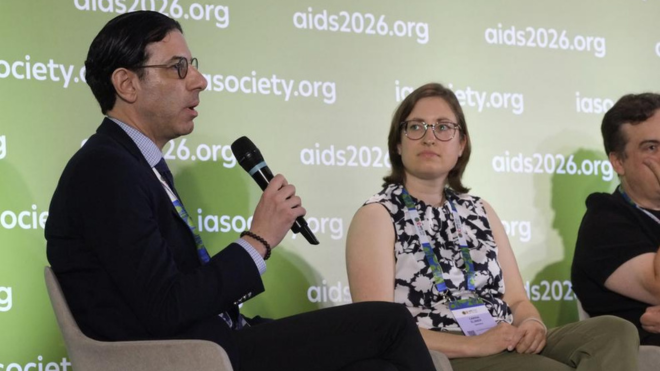
Two more people appear to be in long-term remission from HIV after stem cell transplants to treat cancer, researchers reported at the 26th International AIDS Conference (AIDS 2026) in Rio de Janeiro, Brazil. If they stay virus-free, they will be the 12th and 13th people cured this way – and each brings something new to a puzzle scientists are still piecing together.
Both men received transplants from donors carrying two copies of a rare mutation, CCR5-delta32, which disables the receptor most strains of HIV use to enter cells. Both stopped antiretroviral treatment under close monitoring and have kept undetectable viral loads since. As with earlier cases, the researchers stressed that the procedure is too dangerous and costly to be a cure for anyone without life-threatening cancer.
The 'Essen patient', presented by Dr Carina Elsner of University Hospital Essen, is the first cured person also living with hepatitis B. He is now around 14 months off HIV treatment with no rebound. Two features stand out: he carries some HIV that uses a different receptor, CXCR4, which the donor mutation does not block – yet this did not prevent remission. And after stopping treatment his hepatitis B reactivated, though his rebuilt immune system now appears to be bringing it under control.
The 'Kansas City patient', described by Dr Wissam El Atrouni of the University of Kansas Medical Center, is by far the youngest – diagnosed with leukaemia at 21. His recovery was gruelling, with a failed first transplant, a second stem cell boost and a spell in intensive care. Seventeen months on, tests find no intact, functioning virus in his blood, offering unusually detailed biological markers of a cure, though he still carries HIV antibodies and immune responses that may reflect lingering viral fragments.
Scientists still cannot pin down why some transplants clear HIV and others do not; no single factor is shared across all cases. The value, they say, lies in guiding safer approaches – such as gene editing to disable CCR5 – that could one day reach far more people.
Read this news story in full on aidsmap.com.
New US HIV funding deals sideline civil society as cuts bite

The United States is rewriting the terms of its global HIV response through a wave of bilateral agreements that give community organisations little role – even as fresh data reveals the damage already done by aid cuts.
At a pre-conference session organised by the US government at AIDS 2026, activists took the stage as Jeff Graham, acting US Global AIDS Coordinator, spoke, chanting "You lie, people die, restore PEPFAR now." Graham described the changes as "changing the model, not the mission."
Dr Jirair Ratevosian of the Duke Global Health Institute reviewed 28 of the bilateral memoranda of understanding that now govern US funding for HIV, tuberculosis and malaria; 34 have been signed since the first, with Kenya, in December 2025. Each sets out a five-year plan in which US support declines, with money flowing government-to-government and bypassing many of the non-government organisations that traditionally delivered services. Planned US funding is roughly one third lower than in 2025, while recipient governments are expected to make up the shortfall – a tall order for countries facing debt crises, such as Ethiopia and Mozambique.
The agreements fund a much narrower programme than PEPFAR previously did, more tightly focused on HIV treatment. Programmes stopped or heavily cut include HIV prevention for key populations, services for adolescent girls and young women, support for orphans and vulnerable children, voluntary medical male circumcision and harm reduction. Civil society and key population-led organisations are largely absent from the agreements.
An amfAR survey presented by Elise Lankiewicz put figures to the disruption. Of 166 organisations responding across 46 countries, 77% had an award delayed or terminated, and 72% of those serving key populations were forced to close these services, with local providers hit hardest. Separately, Ramona Godbole of the Clinton Health Access Initiative reported that 77,163 fewer children received HIV treatment in 2025 than in 2024 – a 14% fall.
"Many of the programmes that bring people into care and keep them there have been stopped," Lankiewicz said. "Treatment continuity now rests on a system that has lost many of its entry points."
Countries without an agreement are especially exposed, Ratevosian warned – among them South Africa, home to the world's largest HIV epidemic.
Read the news story about the US agreements in full on aidsmap.com.
Read the news story about the PEPFAR cuts in full on aidsmap.com.
Alternative first-line HIV regimen limits excess weight gain
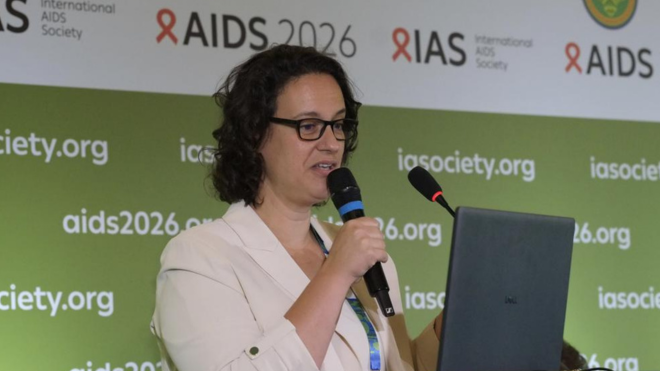
A first-line HIV treatment built around doravirine caused less weight gain than a standard dolutegravir-based regimen while keeping the virus equally well suppressed, a South African trial reported at the conference.
The OptiDOR trial randomised 600 adults starting HIV treatment for the first time to one of two regimens – doravirine / tenofovir disoproxil (TDF) / lamivudine, or dolutegravir / tenofovir alafenamide (TAF) / emtricitabine. Most participants were women, around a quarter had advanced HIV and about one in three were clinically obese. Weight gain is a known side effect of starting treatment, and is greatest with tenofovir alafenamide combined with an integrase inhibitor such as dolutegravir – the doravirine regimen avoids both.
At 48 weeks, the doravirine regimen matched dolutegravir on viral suppression (89% vs 90.7% with a viral load below 50 copies/ml). Participants on doravirine gained significantly less weight (about 1.9kg less on average), and fewer put on 5% or more of their body weight (41% vs 57%). Their cholesterol and other blood fats also improved more.
But the doravirine regimen carried a resistance cost: nine people had treatment failure, and seven developed high-level doravirine resistance, all linked to missed doses and advanced HIV at the start. The dolutegravir arm had six treatment failures, but none led to resistance.
Dr Joana Woods of Wits Ezintsha, University of the Witwatersrand, said doravirine / TDF / lamivudine is not a universal replacement for dolutegravir but "offers a targeted first-line option where preventing obesity and cardiometabolic risk is a priority."
Read this news story in full on aidsmap.com.
AIDS 2026 webinar
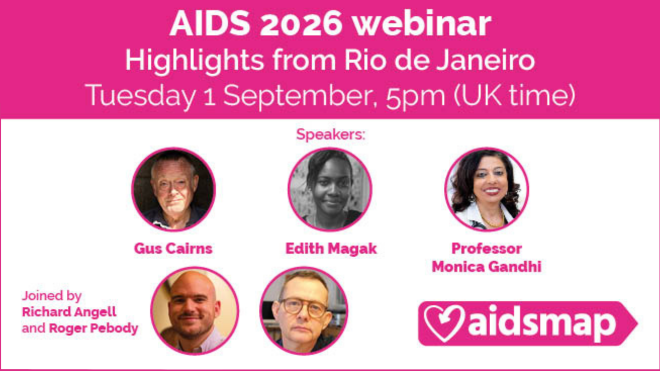
On 1 September from 5-6pm (UK time), aidsmap is holding a special one-hour webinar bringing together key insights, emerging evidence and important discussions from AIDS 2026.
aidsmap writers Gus Cairns and Edith Magak, along with Professor Monica Gandhi from the University of California San Francisco, will each present their personal highlights from the conference.
Fiji faces the world's fastest-growing HIV epidemic, driven by methamphetamine injecting
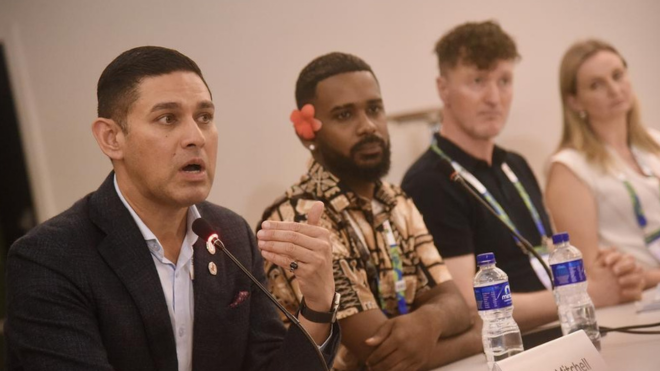
Fiji now has the world's fastest-growing HIV epidemic, fuelled by people injecting methamphetamine, doctors told the conference. Roughly one in 60 adults is living with HIV.
Fiji only declared its outbreak in early 2025, after diagnoses had risen by 27% in a single year – part of a more than 30-fold increase since 2010, said Dr Jason Mitchell, who heads the country's National HIV Outbreak Cluster Response Task Force. Among people who inject drugs, HIV prevalence has reached around 64%, and the epidemic is now spilling into the wider population. Vertical transmission – from mother to child – stands at 18%, far above almost anywhere else, with a baby born with HIV every week.
Mitchell linked the crisis in part to a culture of sharing: the shared bowl used for kava, a ceremonial drink, has parallels in the sharing of needles, even within families. Many people begin using methamphetamine by injecting it rather than smoking it.
A molecular surveillance study presented by Dr Dashika Balak, of Fiji's Ministry of Health and Medical Services, sequenced samples from 278 mostly newly diagnosed people to map transmission and check for drug resistance. Most participants were Indigenous iTaukei men, and over half injected drugs; gay and bisexual men made up just 2%. Reassuringly, only one case of resistance to dolutegravir – a mainstay first-line drug – was found. Three transmission clusters emerged, two driven by injecting drug use.
The treatment picture is stark. Of those diagnosed, only 56% are on treatment, and just 15% of those are virally suppressed – meaning only about 3.2% of everyone living with HIV in Fiji has the virus under control.
Fiji does not have a needle and syringe programme – Balak called it "a matter of national urgency" to set up one. Mitchell warned that stockouts of test kits and HIV drugs are common, while Global Fund support beyond 2026 is uncertain. "Perhaps the greatest crime and shame of all is that this is all preventable," he said.
Read this news story in full on aidsmap.com.
Ugandan audit finds mothers diagnosed too late to prevent infant HIV
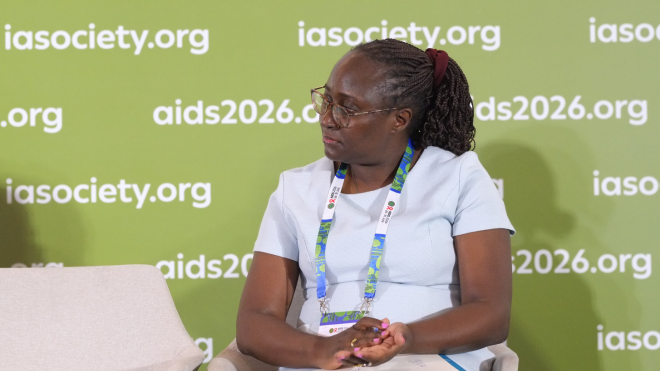
More than four in ten mothers whose babies acquired HIV in Uganda were not diagnosed until they were already breastfeeding, according to a national audit presented to the conference.
Linda Nabitaka of Uganda's Ministry of Health said her team reviews infants who acquire HIV from their mothers to find where prevention breaks down. They examined 754 records of infants diagnosed between July 2021 and September 2025 across 47 health facilities, analysing the 365 records that were complete.
Just 21% of the mothers had been diagnosed before pregnancy and 15% during antenatal care, while 43% were first diagnosed while breastfeeding. While Ugandan guidelines recommend HIV testing every three months until breastfeeding ends, Nabitaka estimated that around half of those diagnosed late had tested negative during antenatal care and were then not tested again until they were breastfeeding.
Other gaps stood out: 71% did not know their partner's HIV status, only 37% had ever had a viral load test, and among those tested, 29% were not virally suppressed. Infant preventive medicine was recorded for just half of babies. Nabitaka said her priorities were point-of-care viral load testing and better viral suppression, along with partner testing – even for mothers who test HIV negative, since some acquire HIV later in pregnancy or while breastfeeding.
"A mother who is never tested has not been failed by science, she has been failed by service delivery," commented Dr Doris Macharia, president of the Elizabeth Glaser Pediatric AIDS Foundation.
Read this news story in full on aidsmap.com.
Friends of aidsmap
aidsmap turns complex HIV research into accurate, independent and accessible information, reaching people living with HIV, healthcare professionals, and communities worldwide.
By giving a regular donation and becoming a Friend of aidsmap, you will play a vital role in aidsmap’s next chapter. From conference reporting to bringing on a new generation of writers in the Global South, your support gets the latest HIV science to healthcare providers, people living with HIV and the HIV voluntary sector.
When you sign up as a Friend of aidsmap, we’ll send you a unique pink aidsmap badge.