
Meningitis vaccine fails to prevent gonorrhoea in Australian trial
A meningitis vaccine that was hoped to offer cross-protection against gonorrhoea provided no benefit in a randomised trial of gay and bisexual men in Australia, in a result described as "unexpected and somewhat disappointing, but very clear."
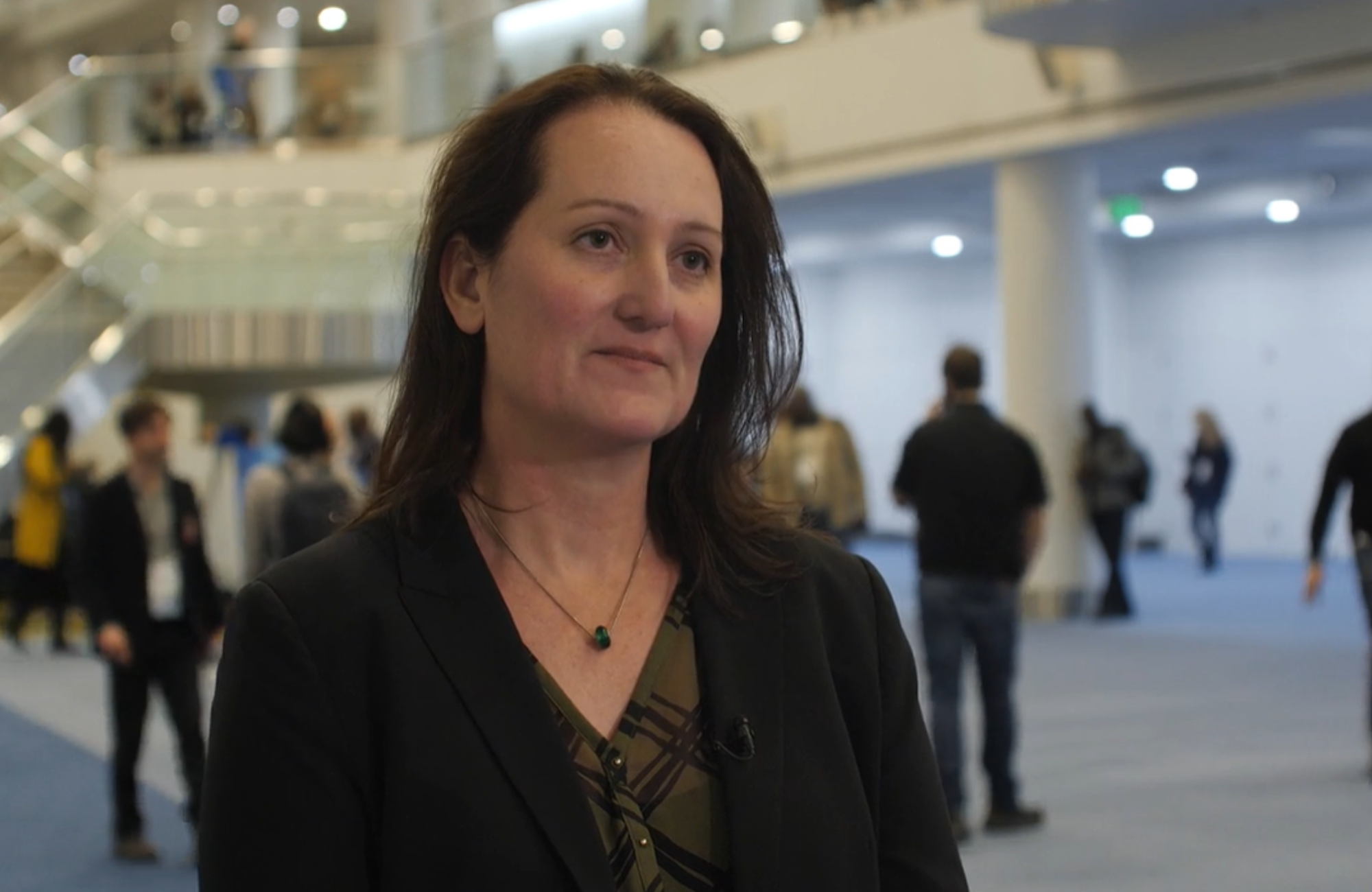
Professor Kate Seib of Griffith University presented results of the GoGoVax study at the Conference on Retroviruses and Opportunistic infections (CROI 2026) in Denver, US. (Watch our video interview with her about the study on YouTube.) The 4CMenB vaccine (Bexsero), routinely given to children to prevent meningitis B, targets a bacterium closely related to the one causing gonorrhoea. Earlier observational studies had suggested it might prevent 33-40% of gonorrhoea infections – evidence that led the UK's NHS to begin offering the vaccine to people at higher risk, especially gay and bisexual men.
In the trial, 620 gay and bisexual men and trans and non-binary people were randomised to receive either Bexsero or a placebo, given in two doses three months apart, with follow-up over two years. Participants had frequent STI check-ups and testing at three infection sites (urethra, rectum and throat). The study population was at high risk of gonorrhoea: 90% had had it before, 60% reported more than ten partners in the previous six months, and only 1.2% always used condoms.
The vaccine offered virtually zero protection. The annual incidence of a first gonorrhoea episode was 48% in both groups, while the rate of any infection including repeat episodes was 60% and 61% in the vaccine and placebo arms, respectively. Results were similarly null across all three infection sites and for symptomatic infections. No statistically significant differences were found in any subgroup.
This is the second randomised trial of 4CMenB in gay and bisexual men to show no efficacy, following the French DoxyVAC study. However, Seib cautioned against generalising the findings to other populations, especially cisgender women, where the route of infection and risk of complications differ.
Two further large trials – MAGI, in men and women in the US, Malawi and Thailand, and BIYELA, in young women in South Africa – are underway. Gonorrhoea prevention in women remains particularly important, as the infection is linked to pelvic inflammatory disease, a major cause of infertility.
Children's HIV studies explore viral remission, antibodies and injectables
Three studies presented at CROI 2026 showcased innovative approaches to treating children and adolescents with HIV, pursuing viral remission, using broadly neutralising antibodies (bnAbs), and delivering long-acting injectable treatment.
Dr Gabriela Cromhout of the University of KwaZulu Natal presented results from the Azaphile study, in which 19 South African children who started antiretroviral therapy (ART) at birth had their treatment intentionally stopped. The children, aged four to six, were selected because they had near-zero HIV DNA reservoirs after years of viral suppression. While 13 rebounded within six weeks, three experienced delayed rebounds and three remain in viral remission off ART – one for over four years. Across the wider cohort, eight children are now in remission off ART, compared with adult studies in which 96% rebound within six weeks. "We hypothesise that greater numbers of very-early treated children would achieve cure/remission following broadly neutralising antibody interventions," Cromhout said.
Dr Gbolahan Ajibola of the Botswana-Harvard AIDS Institute Partnership presented preliminary results from Tatelo Plus, in which 12 children who started ART within days of birth were given three bnAbs. After excluding two children with resistance to more than one bnAb, the remaining ten were taken off ART and maintained on bnAbs alone. All ten have maintained undetectable viral loads. Notably, nine were HIV-antibody negative on standard testing – seroreversion is rare in adults but more common in early-treated children. The next phase will test whether the children can control HIV after stopping the bnAbs too, which would be the first demonstration that bnAbs can promote post-treatment control in children.
The IMPAACT 2017 (MOCHA) study, presented by Dr Aditya Gaur of St Jude Children's Research Hospital in Memphis, reported final week-96 results for long-acting injectable cabotegravir and rilpivirine in 144 adolescents aged 12 to 17 across three continents. No participant experienced virological failure and 94% maintained viral loads below 50 throughout. Retention was excellent at over 95%. While 42% reported injection site reactions, almost all were mild or moderate and became less common over time. More than 97% said they preferred injections to daily pills.
Three new injectable drugs could be part of twice-yearly HIV treatment
The prospect of HIV treatment administered just twice a year took a step forward at CROI 2026, with early human trial data presented on three experimental injectable antiretrovirals. The results suggest that complete long-acting regimens given every four to six months may eventually be achievable, though all three drugs are at an early stage of development.
Current long-acting options include cabotegravir plus rilpivirine (given monthly or every two months) and lenacapavir (given every six months), but lenacapavir currently lacks an equally long-acting partner drug.
VH-499 is a novel capsid inhibitor from ViiV Healthcare – potentially the second drug in that class after lenacapavir. In a phase I study of 65 HIV-negative adults, a single injection was generally well tolerated; most injection site reactions were mild and short-lived. Pharmacokinetic modelling supports twice-yearly dosing, with intramuscular injections showing a half-life of around 11 weeks and effective concentrations expected within 48 hours.
VH-184, also from ViiV, is a third-generation integrase inhibitor active against many drug-resistant HIV strains. A phase I study in 76 HIV-negative adults found that one of two formulations tested had a half-life of up to nearly 20 weeks, with modelling predicting that four- to six-monthly dosing would maintain effective drug levels. Injection site reactions were common but mostly mild.
GS-3242, Gilead Sciences' investigational integrase inhibitor, showed potent antiviral activity in a phase Ib study in 20 people with HIV, with viral load reductions at the highest dose comparable to those seen with the combination pill Biktarvy. In a separate phase Ia study in 34 HIV-negative volunteers, a single intramuscular injection had a half-life of 50 to 76 days, supporting a dosing interval of at least four months; a six-month interval is now being evaluated.
VH-499 and VH-184 could potentially be combined with an ultra-long-acting formulation of cabotegravir or ViiV's broadly neutralising antibody lotivibart, while GS-3242 could be paired with lenacapavir or Gilead's broadly neutralising antibodies teropavimab and zinlirvimab. Phase II trials of all three drugs are expected to begin this year.
App reduces viral rebound in men with HIV who use stimulants

A digital health app significantly reduced viral rebound among men with HIV who use crystal methamphetamine and other stimulants, according to results from a randomised controlled trial presented at CROI 2026.
The trial enrolled 286 men with HIV and stimulant use disorder from across the United States. Nearly half had a detectable viral load at baseline, and most (84%) were not engaged with substance use treatment. Participants mailed in dried blood spot biospecimens for objective viral load measurement rather than relying on self-report.
The app offered daily check-ins to track antiretroviral adherence and mood, plus video modules building skills such as gratitude, mindfulness, and coping. "Strengthening these skills is theorised to reduce stress, improve mood, and maintain medication routines, leading to reduced viral rebound," said Professor Sabina Hirshfield of SUNY Downstate Health Sciences University, a principal investigator on the trial.
Men randomly allocated to use the app had 58% lower odds of a detectable viral load at six months compared to controls. The 'number needed to treat' was five – meaning that for every five people given access to the app, one additional person achieved viral suppression who would not otherwise have done so – suggesting meaningful population-level impact if the intervention was scaled up.
However, the benefit was not sustained: there was no significant effect on viral load at 12 months, nor on meth use severity.
Researchers suggest pairing the app with telehealth psychotherapy and contingency management in order to deliver more durable outcomes. Unlike opioid use disorder, stimulant use disorder has no FDA-approved pharmacological treatment, making scalable behavioural tools particularly valuable for this population.
Immune modulator N-803 shows limited effect on viral rebound in trials
Three clinical trials presented at CROI 2026 in Denver found that the immune-modulating drug N-803 (Anktiva) largely failed to delay viral rebound in people with HIV who interrupted antiretroviral treatment, though the drug did produce some encouraging changes in immune response and the viral reservoir.
N-803, an interleukin-15 receptor superagonist developed by ImmunityBio, activates natural killer cells and CD8 killer T-cells and strengthens immune memory. Already approved for bladder cancer, early research suggested it might also help the immune system control HIV. The three trials – ACTG A5386, a Rockefeller University study, and the Thai RV550 trial – assessed N-803 with or without broadly neutralising antibodies (bnAbs), followed by a monitored treatment interruption.
In ACTG A5386, only one of 19 participants who received N-803 with bnAbs met the primary endpoint of a viral load below 200 copies at eight weeks off treatment. These results contrast with more encouraging findings from the Rockefeller trial, reported at the IAS 2025 conference. However, there was a key difference in study design: in the Rockefeller study, participants interrupted treatment just two days after receiving N-803 and bnAbs, when they would be at peak levels; in ACTG A5386, treatment interruption began only after 52 weeks of dosing of N-803 and bnAbs.
Despite the limited virological effect, N-803 showed some biological activity. In ACTG A5386, around 70% of participants showed a transient decline in intact HIV DNA in the reservoir, and there were modest shifts towards 'stem-like' CD8 T-cells – a cell type previously linked to post-treatment control.
In RV550, which enrolled people treated during acute infection, N-803 reduced viral RNA in lymph nodes by 50-fold, though without significantly delaying rebound.
The researchers concluded that N-803 alone, or combined with bnAbs, is insufficient for durable remission, but may prove valuable as part of broader combination strategies.