
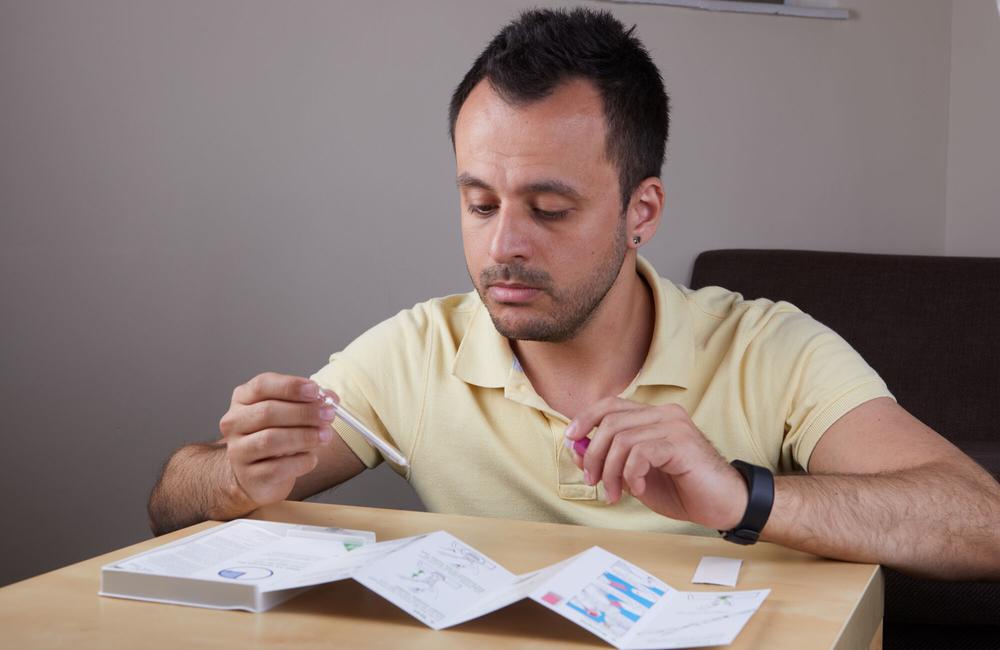
While clinic-based testing for HIV and other sexually transmitted infections in England has gone down, there’s been a shift towards online self-sampling, with an increase across population groups. However, recent research shows that this increase has been uneven, with gay and bisexual men more likely to access self-sampling and straight men, people of colour and those from more deprived areas less likely to do so.
Novel delivery mechanisms can work to reinforce and worsen existing health disparities. This makes it crucial to ensure that access to clinic-based testing is maintained alongside online self-sampling.
Background
New cases of sexually transmitted infections (STIs) continue to rise in the United Kingdom, with young people aged 15 to 24, Black people and gay and bisexual men disproportionately impacted. As sexual health services have become more fragmented over time, and budgets have been cut despite increased demand, finding novel ways of delivering reliable services – particularly testing – has become increasingly crucial.
Over the past decade, the introduction of online postal self-sampling for HIV and STI screening has been a central feature of these novel approaches. In England, self-sampling has been implemented at different times using varied models: in some cases, it is integrated into clinic-based services with seamless client tracking, while in others, self-sampling is offered by an external provider, with no direct linkage.
The process is straightforward: a client requests a kit to test for infections such as HIV, chlamydia, gonorrhoea and syphilis online, it is sent to an address of their choice or collected from a clinic or pharmacy, and the collected samples are posted back for laboratory analysis. While swabs and/or urine are required for chlamydia and gonorrhoea nucleic acid amplification testing, a blood sample is required for HIV antibody/antigen screening. In the case of a positive result, the client needs to go into the clinic either for further testing or treatment, while in some cases – such as for chlamydia – treatment can also be accessed online. As a result of online self-sampling, some clinics no longer offer in-person screening for people who don’t have symptoms.
While the aim of self-sampling is to increase access and decrease clinic burden, if uptake is low among those with an unmet need, and if clinic-based services are further reduced, existing health disparities may widen. However, there have been no multi-site studies considering both the rise in self-sampling and the potential for increasing inequity.
The study
The researchers, led by Dr Jo Gibbs from University College London, considered three separate case study areas across England to assess both changes in testing activity after the introduction of online self-sampling and differences by specific population characteristics, such as race and ethnicity, or sexual behaviour. Their results were published in The Lancet Regional Health – Europe.
Self-sampling had been offered earliest in area one – from August 2015. Here, self-sampling was fully integrated with clinical services. Area two saw the implementation of self-sampling in January 2018, while area three only received it in January 2020. In the latter areas, self-sampling was via external providers, with no direct linkage to clinical services. In these instances, most of those who tested positive were referred to their local sexual health clinic for treatment. However, in area two, chlamydia treatment was available via post for uncomplicated cases. In each area, 2022 was compared to the year prior to self-sampling implementation. Each of these comparison years pre-dated the COVID-19 pandemic; additionally, by 2022, pandemic restrictions such as social distancing had been lifted in England completely. In total, the case study areas had a population of over 3.4 million people, with area two being the largest at around 1.8 million people. Only people aged 16 and over were considered in the analysis.
While anyone can access in-person sexual health services, online postal services are restricted to commissioned areas. Certain additional area-specific restrictions, such as only four kits per year for area two, or only asymptomatic users being able to access online self-sampling in area one, applied.
Results
In all three areas, testing for chlamydia, gonorrhoea and HIV went up after online self-sampling was introduced, with a shift away from clinic-based testing to self-sampling. When looking at testing for chlamydia and gonorrhoea, rates of new tests doubled overall when comparing the pre-self-sampling period to 2022 for area one (Incidence Rate Ratio, IRR: 2.1, 95% Confidence Interval, CI: 2.1–2.2); this was similar for area two and somewhat higher for area three (IRR 2.5, 95% CI 2.5–2.5).
However, this progress was uneven across areas and population groups. For instance, while the rates of new HIV tests went up by a ratio of 1.5 (95% CI 1.5–1.5) in area one, they increased by 2.8 (95% CI 2.8–2.9) in area three, when comparing the pre-self-sampling period to 2022. Overall, there was lower uptake of self-sampling for HIV, particularly for area 1, where most HIV tests were still done in clinic in 2022. While areas 2 and 3 had more HIV self-samples taken in 2022 than clinic-based tests, there was an overall downward trend in HIV incidence over the study period, with fewer than 40% of HIV diagnoses based on self-sampling in any area in 2022. The blood sample required for HIV screening may impact self-sampling rates.
Groups who previously had higher rates of testing, such as gay and bisexual men, were more likely to take advantage of self-sampling. Straight men were less likely to adapt to self-sampling and gained the least benefit from the change in testing options. For instance, gay and bisexual men increased chlamydia and gonorrhoea testing by a ratio of 3.6 (95% CI 3.5–3.7) in area two, while it was only 1.8 (95% CI 1.8–1.8) for straight men in this area. This shows how disparities may widen over time: in area one, there was a 10-fold difference in testing rates between gay and bisexual and straight men prior to self-sampling, this increased to a 17-fold difference after the introduction of self-sampling. Interestingly, for area three, women had the highest relative increase overall, even surpassing gay and bisexual men (IRR 3.2, 95% CI 3.1–3.3). However, gay and bisexual men still had the highest number of absolute new tests.
White people and those living in less deprived areas tended to have the largest uptake of self-sampling across case study areas. The areas had diverse social characteristics: area three had the highest proportion of White people (78%), while area two had the lowest (32%). However, area one was the most deprived, with area two being the least deprived.
As online self-sampling was introduced earlier in areas one and two, there was a gradual rise in uptake leading up to the COVID-19 pandemic. However, as the pandemic disrupted clinic services in all areas in March 2020, there was a rapid rise in self-sampling for area three – where it had only been introduced in January 2020. The disruption was also associated with a large uptake of self-sampling in area two, as both areas two and three rely on external providers for self-sampling. Clinic-based testing rates have recovered somewhat but have not returned to pre-pandemic levels.
When comparing clinic-based to self-sampling, test positivity was consistently lower with self-sampling. This is consistent with the fact that someone with symptomatic infection may not be eligible for online self-sampling or may prefer to go to the clinic.
However, the proportion of diagnoses made online was higher than clinic-based diagnoses in 2022 when compared to pre-pandemic diagnoses for chlamydia, gonorrhoea and HIV in all areas. This likely reflects increased testing and not an increase in actual incidence.
Conclusion
“The analyses from this paper indicate that the introduction of online postal self-sampling is associated with an increase in overall testing activity, although the extent of the increase varies by population group and could lead to widening of health inequalities in access to care if other modes of access are not offered,” say the authors. “It is therefore important to provide service users with a choice of ways to test and, as recommended by the World Health Organisation, for online services to complement clinic-based services.”
Gibbs, J et al. Sexually transmitted infection testing and key outcomes following implementation of online postal self-sampling into sexual health services in England: a retrospective observational study of routinely collected service-level healthcare data. The Lancet Regional Health – Europe 61: 101541, 2026 (open access).