
Weekly oral pill keeps HIV suppressed as well as daily treatment

A once-weekly pill could soon give people with HIV an alternative to daily tablets, after two phase III trials found that a weekly combination of islatravir and lenacapavir kept the virus suppressed as well as standard daily treatment. The results were presented at the 26th International AIDS Conference (AIDS 2026) in Rio de Janeiro, Brazil, alongside promising early findings for a second weekly combination.
Modern daily treatment is highly effective, so the choice of regimen increasingly comes down to convenience. Long-acting injectables suit some people, but others would rather not schedule regular jabs, and a weekly pill could ease 'pill fatigue' while widening the options. "Treatment needs to fit into people's lives, not the other way around," said Dr Kenneth Ngure, incoming president of the International AIDS Society.
Islatravir, made by Merck, works in a different way from older HIV drugs. Its development stalled in 2021 when some people taking higher doses saw falls in their immune and white blood cell counts, but a much lower 2mg dose has since resolved the problem.
The two phase III ISLEND trials paired islatravir with lenacapavir, Gilead's long-acting drug already used as twice-yearly PrEP, to create what would be the first once-weekly single-tablet HIV treatment. ISLEND-1 enrolled 607 people who switched from the daily pill Biktarvy (bictegravir / tenofovir alafenamide / emtricitabine) while ISLEND-2 enrolled 626 switching from a range of daily regimens across 13 countries. In both, the weekly pill was non-inferior to daily treatment at 48 weeks: around 93 to 95% kept an undetectable viral load.
No drug resistance emerged, it was well tolerated, and the lower dose caused no decline in immune or white blood cell counts, Dr Amy Colson of the Community Resource Initiative, Boston, told the conference.
One limitation is that neither islatravir nor lenacapavir works against hepatitis B, whereas the tenofovir alafenamide in Biktarvy does. Both trials therefore excluded people living with hepatitis B, although hepatitis B is common in many settings with a high HIV burden. While the researchers strongly encouraged participants who were not immune to get vaccinated, one person who remained unvaccinated had to stop the weekly pill because of hepatitis B.
Participants clearly preferred the weekly pill. In ISLEND-2, nearly two-thirds found their old daily regimen more burdensome, and more than three-quarters were more satisfied with the weekly treatment.
A separate, earlier-stage study tested a different weekly combination, islatravir plus ulonivirine, in 157 people who switched from Biktarvy. At 24 weeks, about 95% maintained viral suppression, again with no immune-cell declines. This combination is further back in development and will now move into larger phase III trials.
If approved, weekly pills would broaden the choices for people who are stable on treatment. Researchers noted that two competing weekly options could also help lower costs and improve access.
Read the news story about islatravavir / lenacapavir in full on aidsmap.com.
Watch our interview with Dr Amy Colson on YouTube.
Read the news story about islatravir / ulonivirine in full on aidsmap.com.
Monthly PrEP pill could cost $3 a year, but excludes Latin America
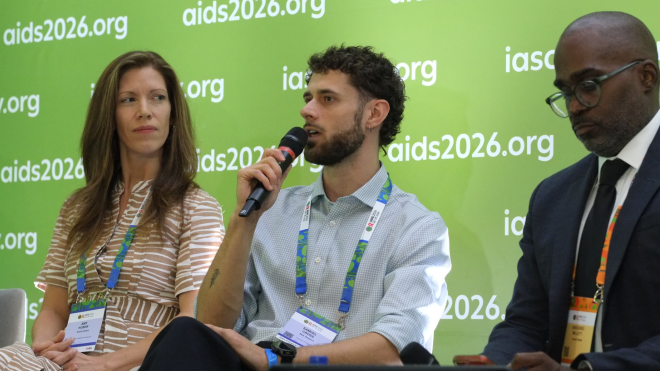
A once-monthly PrEP pill could be manufactured and sold at a profit for around $3 per person per year, which would make it the cheapest HIV prevention drug ever brought to market. But a licensing deal announced days before the conference in Brazil leaves out most of Latin America – including countries hosting the drug's own late-stage trials.
The costing analysis was presented by Dr Samuel Cross of Christchurch Hospital, New Zealand. His team searched a trade database for shipments of the active ingredient in alimatravir (formerly MK-8527), a new type of drug taken as a single 11mg tablet once a month. As well as the raw ingredient price, they added formulation, packaging, transport, tariffs, labour, a standard profit margin and tax, arriving at $2.49 a year – rounded up to $3. The same method has accurately predicted the production costs of other HIV, hepatitis and cancer drugs over the past decade.
For comparison, generic daily oral PrEP costs around $40 a year, the dapivirine vaginal ring $71, and injectable cabotegravir $160. Cross noted the current ingredient price reflects small trial-scale volumes and could fall by around 90% once production scales up.
Efficacy, however, is not yet known. Alimatravir is being tested against daily oral PrEP in phase III trials involving almost 9000 people across 17 countries, with results due in late 2027. Because participants take the tablets unsupervised, Cross said we should anticipate somewhat lower efficacy than trials of medically administered injections.
The bigger controversy is access. Merck's royalty-free licences with seven generic manufacturers cover 129 low- and middle-income countries, but exclude other countries with similar economies, which have around 230,000 new HIV acquisitions a year – nearly half of them in Latin America. Argentina, Brazil and Colombia are all shut out, despite hosting trial sites.
Cross told the conference the pill "needs to be $3 everywhere, not just some places," urging Merck to extend licensing to all middle-income countries, especially those running the trials.
Read this news story in full on aidsmap.com.
Prospect of a monthly pill revives interest in post-exposure prevention
Post-exposure prophylaxis (PEP) – taking HIV drugs soon after a possible exposure to stop infection taking hold – was an unexpected talking point at AIDS 2026, revived by the prospect that a once-monthly pill could turn a demanding four-week course into a single dose.
PEP is the oldest form of drug-based HIV prevention, dating from the late 1980s. A four-week course is recommended, but only about half of people complete it.
Interest has been rekindled by alimatravir, the once-monthly pill now in late-stage trials as PrEP. If it also works as PEP, a single tablet taken after an exposure could replace the four-week regimen. This would be a far easier prospect, particularly if it was readily available in emergency rooms, pharmacies and vending machines – the latter already a reality in São Paulo, Brazil.
The obstacle is evidence. Because PEP is an emergency measure, a conventional trial is hard to design: comparing it with no treatment would be unethical, while a study testing a single dose against the proven four-week course would be unfeasibly large – around 12,500 people. Experts have been weighing up other ways to run a study.
Some trial designs would sidestep a true placebo by modelling the infections that would have occurred without PEP, or by inferring a single dose's advantage by measuring adherence rather than efficacy; others would let people choose whether to be randomised, as in some COVID vaccine studies. Each option carried trade-offs, whether in the number of participants or the risk of skewed results.
The consensus is landing on a ‘zero-event’ design. Rather than counting infections – rare even without PEP – it measures how long until the first failure occurs, gathering detailed data around each case. This turns their rarity into an advantage and could need only about 1000 people. It also suits ‘PEP in pocket’, where people keep their own supply to use after an exposure, with annual check-ups.
Adaobe Olisa of the Nigerian organisation Root to Rise cautioned that proving PEP works is only the start. If alimatravir succeeds, she said, the question shifts to whether it can be delivered "sustainably, safely and equitably at scale".
Read this news story in full on aidsmap.com.
Injectable HIV treatment outperforms daily pills for adolescents
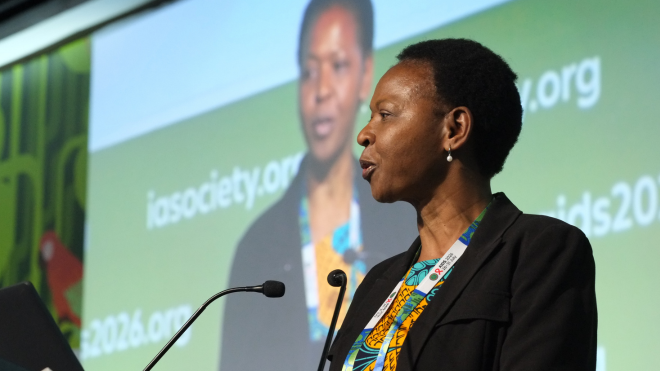
Eight-weekly injections of cabotegravir and rilpivirine kept HIV better suppressed than daily pills among adolescents in Africa, researchers reported at the conference. It is the first randomised trial to compare injectable and oral treatment in this age group, who often struggle with daily tablets and have poorer outcomes than adults.
The LATA trial enrolled 476 adolescents aged 12 to 19 in Kenya, South Africa, Uganda and Zimbabwe, all of whom had been virally suppressed on oral treatment for at least a year. They either continued standard daily tablets (a dolutegravir-based regimen) or switched to injections of cabotegravir and rilpivirine every eight weeks.
By 96 weeks, fewer than 1% of those on injections had experienced a rebound in their viral load, compared with just over 6% on daily pills. This made the injectable regimen not merely non-inferior to tablets, but statistically superior. Injection site reactions were common but mostly mild, similar to rates seen in adults. Of the two adolescents on injections whose virus rebounded, one developed resistance to both drugs.
Adolescents strongly preferred the injections: 94% said they made things "a lot easier" than daily medication.
Presenting the results, Dr Mutsa Bwakura Dangarembizi of the University of Zimbabwe Clinical Research Centre said the findings support the WHO recommendation that injectable treatment be offered as an alternative to ease the burden of daily adherence. But injectable treatment is not available where need is greatest: while generic injectable cabotegravir is being developed for lower-income countries, no generic injectable rilpivirine is yet available.
Read this news story in full on aidsmap.com.
AIDS 2026 webinar

On 1 September from 5-6pm (UK time), aidsmap is holding a special one-hour webinar bringing together key insights, emerging evidence and important discussions from AIDS 2026.
aidsmap writers Gus Cairns and Edith Magak, along with Professor Monica Gandhi from the University of California San Francisco, will each present their personal highlights from the conference.
Nearly 200,000 lenacapavir shots delivered across Africa as demand outpaces supply
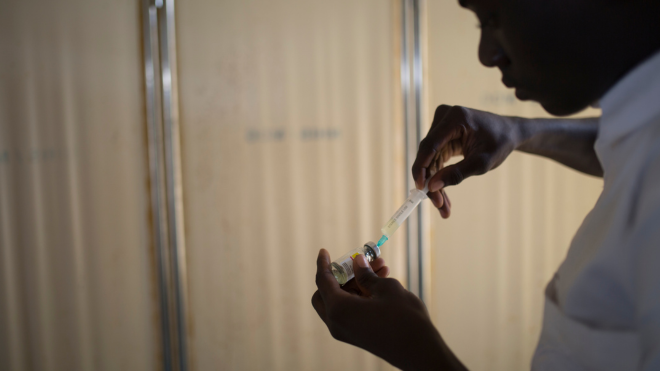
Nearly 200,000 doses of lenacapavir – the twice-yearly injection that offers highly effective HIV prevention – have been delivered across Africa in the first months of rollout, according to data from nine early-adopter countries presented at the AIDS 2026 conference. But in several countries, demand is already outstripping supply.
Most countries are obtaining the drug through a partnership between the US State Department, the Global Fund and Gilead Sciences, which sells it at no profit. The programme aims to reach at least three million people by the end of 2028. Unusually, wealthier and poorer countries are rolling out the injection at the same time, rather than the poorest countries having to wait years for access.
A total of 191,620 doses have been delivered in Eswatini, Kenya, Lesotho, Mozambique, Nigeria, South Africa, Uganda, Zambia and Zimbabwe – around 14% of the more than one million planned for 2026. Nearly 66,000 people have started lenacapavir at 900 sites, and over 10,000 healthcare workers have been trained.
Several common themes emerged. Rather than building standalone services, countries integrated lenacapavir into existing clinics, antenatal and sexual health services, and community outreach, delivered by the current workforce. Many programmes prioritised adolescent girls and young women, and pregnant and breastfeeding women.
Kenya stood out for its focus on key populations – groups at especially high risk, such as sex workers, gay and bisexual men, and people who inject drugs. Rather than set up new services, it delivered lenacapavir through drop-in centres and peer networks these communities already trusted, reaching over 4000 people.
The main obstacle has been supply. In several countries, initiations slowed once early stocks ran low, and some reserved doses for returning clients rather than new ones. Presenters stressed that creating demand a programme cannot then meet risks undermining hard-won trust, making accurate forecasting essential.
"Our goal is not just to launch lenacapavir. It's to get countries to use it strategically," said Professor Ingrid Katz of the US Department of State.
Read this news story in full on aidsmap.com.
Water shortages, hunger and violence worsen HIV risk in East Africa
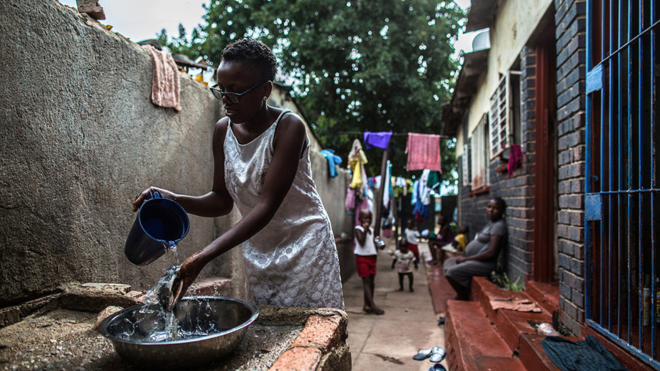
Two studies presented in the same session at the conference found that the conditions in which people live – reliable access to water, enough food, and freedom from violence – strongly shape both HIV treatment success and the risk of acquiring HIV.
In the first, researchers in western Kenya found that adults on HIV treatment who lacked reliable access to clean water had nearly four times the odds of a poor treatment outcome, such as an unsuppressed viral load, a very low CD4 count, an opportunistic infection or missed appointments.
The study compared 181 people who had at least one poor treatment outcome with 175 similar people who had none, matched by age, sex and time on treatment. Over 70% were water insecure. The odds of a poor outcome rose sharply as water insecurity worsened, and the gap between women and men disappeared once water was scarce: predicted risk reached 59% in both.
"HIV treatment success is not contingent only on the clinical services that people receive, but also on the conditions in which they live," said Jacquelyne Odak of Maseno University, who presented the findings. Water shortages, she explained, affect people's ability to take medication, stay hydrated, keep clean and prepare food – all of which bear on how well treatment works.
The second study followed almost 3500 HIV-negative women in Uganda over four years. Recent intimate partner violence was the single strongest predictor of acquiring HIV, more than tripling the rate. Crucially, risks multiplied when hardships overlapped: women facing partner violence, food insecurity and water insecurity together acquired HIV at 18 times the rate of women facing none.
"HIV prevention strategies really need to move beyond screening for individual risk factors alone," said Dr Amanda Miller of San Diego State University. Screening for several vulnerabilities at once, she suggested, could make better use of limited resources, including PrEP.
Read this news story in full on aidsmap.com.
Dolutegravir suppresses high viral loads faster, and works well as two-drug regimen
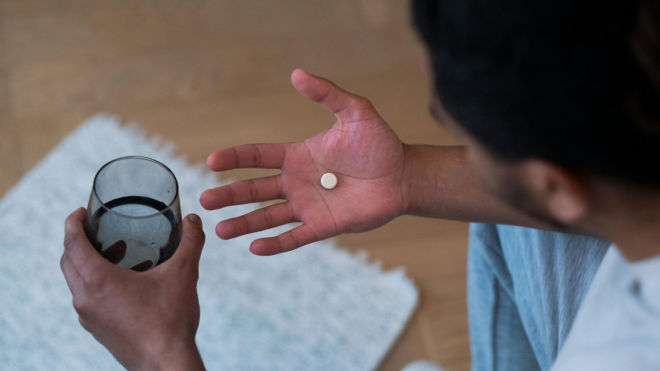
Two studies presented at AIDS 2026 add to the evidence on integrase inhibitors, the backbone of modern first-line HIV treatment. The first found that dolutegravir clears a high viral load faster than bictegravir, while the second found that a two-drug dolutegravir combination worked as well as a standard three-drug regimen containing bictegravir.
In the first study, researchers analysed records from almost 2530 previously untreated people with a high viral load (above 100,000) who started treatment in France between 2009 and 2023. Those given a dolutegravir-based regimen reached an undetectable viral load significantly faster than those given bictegravir. By 24 weeks, 75% of the dolutegravir group were fully suppressed, compared with 69% of the bictegravir group. The advantage was greatest in people with the highest viral loads and those starting treatment during acute (very recent) infection.
Dr Antoine Chéret of the University of the French West Indies said the findings could guide the choice of first-line treatment for people with a high viral load, and might also help preserve immune function and limit the size of the HIV reservoir.
The second study, the randomised In VOGUE trial, compared the two-drug combination dolutegravir / lamivudine (Dovato) with the widely used three-drug pill bictegravir / tenofovir alafenamide / emtricitabine (Biktarvy) in 509 previously untreated adults. To mirror everyday practice, the trial set no limits on viral load or CD4 count, and people began treatment before resistance test results were available; 44% had a high viral load at the outset.
At 48 weeks, the two-drug regimen was non-inferior to the three-drug one, with 89% suppressed versus 92% – a difference within the pre-agreed margin. It performed just as well in people with high viral loads or weakened immune systems, and no one in either group developed drug resistance.
Dr Jade Ghosn of Bichat University Hospital in Paris said the results reinforce dolutegravir / lamivudine as an effective first-line option for a broad range of people, including when treatment starts immediately after diagnosis.
Read this news story in full on aidsmap.com.
Friends of aidsmap
aidsmap turns complex HIV research into accurate, independent and accessible information, reaching people living with HIV, healthcare professionals, and communities worldwide.
By giving a regular donation and becoming a Friend of aidsmap, you will play a vital role in aidsmap’s next chapter. From conference reporting to bringing on a new generation of writers in the Global South, your support gets the latest HIV science to healthcare providers, people living with HIV and the HIV voluntary sector.
When you sign up as a Friend of aidsmap, we’ll send you a unique pink aidsmap badge.