Key points
- HIV treatment prevents HIV from damaging your immune system, and so prevents ill health and prolongs lives.
- Everyone who has diagnosed HIV is recommended to take HIV treatment. It is better to begin treatment sooner, rather than later.
- Combinations of two or three anti-HIV drugs provide the best chance of reducing the amount of HIV in your blood to very low (undetectable) levels.
- Having an undetectable viral load prevents HIV from being passed on during sex.
- It is important to take your anti-HIV drugs as prescribed in order to prolong the benefit you will get from them and reduce the risk of drug resistance.
- Tell a member of your HIV healthcare team if you are having problems with your anti-HIV drugs, including side effects.
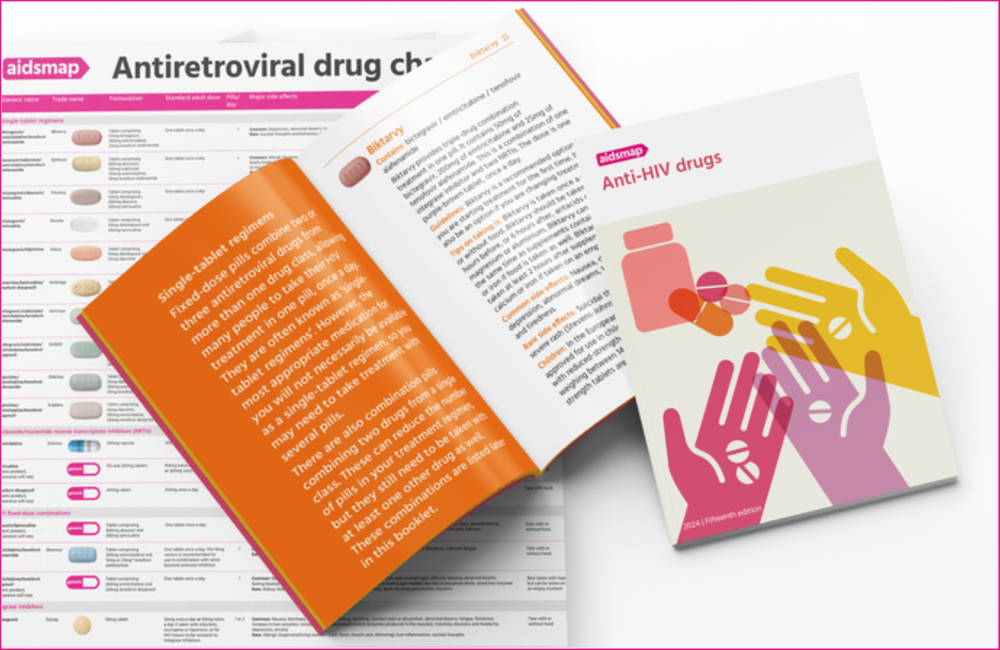
This booklet is a starting point for anyone who wants to find out about treatments for HIV. It provides information about the drugs used – known as antiretroviral drugs or antiretroviral therapy (ART).
The booklet has been written to help you decide what questions to ask your doctor about any course of treatment you might be considering. It should not replace discussions with your doctor.
Information in this booklet has been reviewed by a panel of medical experts and includes information on issues such as side effects and drug interactions (with other antiretroviral drugs and drugs used for other conditions). For full details of side effects and drug interactions, see the information leaflets that are produced by drug manufacturers and included in the drug’s packaging.