
Global HIV Vaccine Enterprise sets out road map for next five years
Following last year’s positive result from an HIV vaccine trial in Thailand the Global HIV Vaccine Enterprise has issued a new scientific plan, calling for a speeded-up effort to test new vaccine candidates in large trials.
Global HIV Vaccine Enterprise executive director Dr Alan Bernstein also called for young scientists to get involved in the field of HIV vaccine research.
The plan, available for download at the Global HIV Vaccine Enterprise website, outlines two key priorities: better integration of the latest information from basic science and ongoing trials into new vaccine studies, and better use of information from preclinical studies and from other areas of scientific research.
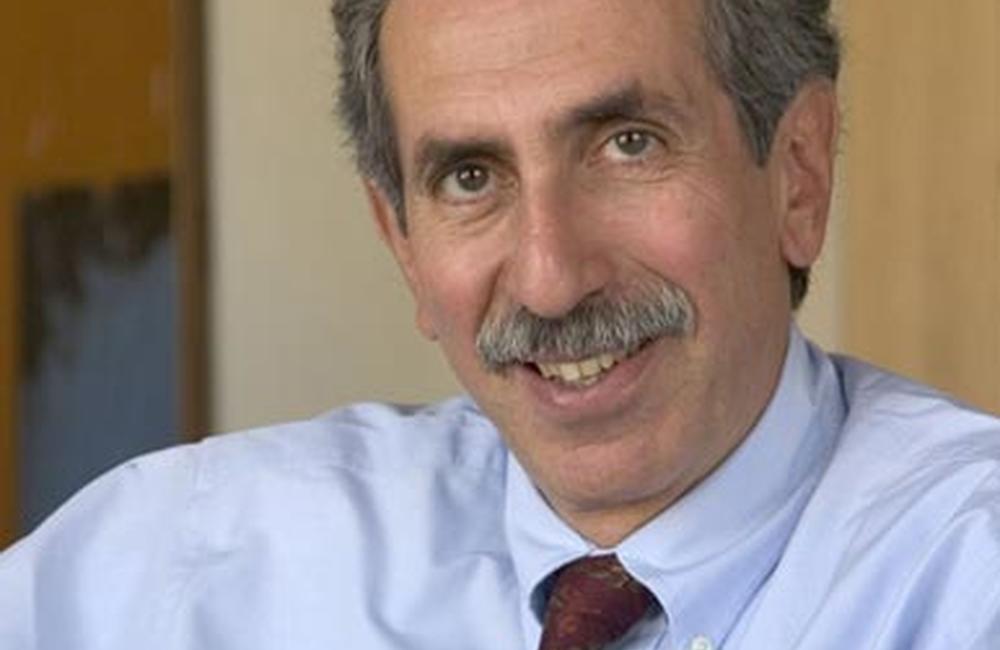
Aidsmap.com spoke to Dr Alan Bernstein, pictured above, about some of the priorities in the HIV vaccine field.
Following the failure of the adenovirus-based HIV vaccine developed by Merck in 2007, there has been considerable debate about the future of HIV vaccine research, with some pronouncing the field a dead-end, and others calling for a back-to-basics approach to investigating how HIV interacts with the immune system.
But the Global HIV Vaccine Enterprise says that as well as more laboratory science, more trials in humans are needed if we are to answer the fundamental questions still puzzling vaccine researchers.
One example of the sort of question that needs to be answered is: which immune system changes after vaccination correlate with protection against HIV, and do these changes indicate a mechanism by which the immune system protects against HIV infection that can be exploited in future vaccine development?
The Thai trial of a two-vaccine regimen that reduced the risk of HIV infection by 31% is still being analysed to determine what can be learnt about the correlates of protection, with laboratories all over the world currently examining samples provided by the trial sponsors.
Dr Bernstein is hopeful that the pipeline of promising candidate vaccines will soon offer some serious follow-up candidates to the vaccines tested in the Thai trial and the STEP and Phambili trials, but larger trials of promising candidates need to get underway more quickly.
“We need to go from one phase 2b study every seven years to something like one every year, so that we have the opportunity to incorporate new findings into the design of studies.”
The Global HIV Vaccine Enterprise calls this process “integrating iterative scientific enquiry with product development.”
This means quickly incorporating new information from ongoing studies or failed studies into the design of new studies and trials that are just getting underway. It also means sharing data more quickly and testing a wider variety of vaccine approaches sooner in human efficacy trials.
“Trials are expensive – phase III trials cost at least $120 million over their lifetime. [Starting one each year] implies a ten to fifty-fold increase in funding. So if there’s another breakthrough like the Thai trial we may need more than a 50% increase in funding.”
However Dr Bernstein declined to say how much the Global HIV Vaccine Enterprise needs in order to fully realise its plans.
The need for lots of new efficacy trials also implies the need for a big investment in clinical trials infrastructure. Vaccine trials may need to recruit tens of thousands of people to prove efficacy in the future, especially if expanding treatment has a greater effect on transmission at the same time as other prevention interventions are also reducing HIV incidence.
“Partnerships are needed between the developed and developing world. The cost of building that trials capacity is a drop in the ocean in comparison with paying for the drugs.”
“I don’t like dichotomous discussions, treatment or prevention, short-term or long-term. If we’ve learnt anything about this epidemic, it’s that it needs a long-term multifaceted approach. If we don’t implement what we know works, we’re not going to control this disease.”
“Making efficient use of clinical trial sites, regardless of prevention modality and funder, is going to be critical. Before we ask for more resources we need to be very sure that we are using existing resources to maximum efficiency.”
The Global HIV Vaccine Enterprise is also seeking to mobilise new financial resources, and new research capacity.
“There are some countries that are doing very little in terms of HIV vaccine research,” said Dr Bernstein, although he wouldn’t be drawn into naming names. (Russia is a notable absence, while vaccine research in some Asian countries is still under-developed relative to the size of their science and technology sectors).
“I’m very pleased that China has created mega-science initiatives, one of which is an HIV vaccine initiative, which is joining the Global HIV Vaccine Enterprise. Europe is going through a major re-organisation of science programming so I hope we can look forward to useful discussions with the European Union about how to go forward.”
Responding to perceptions outside the HIV field that a vaccine for the infection is impossible, Dr Bernstein said: “It’s as likely that there will be a vaccine for HIV as drugs for Alzheimer’s or some types of cancers. There are sound reasons to believe that we can get a vaccine.”
But the development of successful vaccines is likely to depend on the renewal of the research workforce too. Dr Bernstein says that the HIV vaccine field needs young scientists who have the ambition to make a career in this area.
“Pasteur said that what every scientist wants is to make a great discovery, to have it applauded by your peers and to benefit humanity. I can’t think of a better field than HIV vaccine research [to fulfil these needs]. It’s become apparent that because of the difficulty in developing a vaccine, we’re going to need great scientists. For young scientists it’s a great opportunity.”
The vast majority of Nobel Prize winners in the natural sciences did the work that led to their prize before the age of 40, Dr Bernstein points out.
“Young people have energy, the naivete to be a great scientist, the openness to new ideas. Watson was 23 when he was doing the most important work in biology, the discovery of the DNA double-helix, and he and Crick wanted to beat the old guy, Linus Pauling.”
The HIV Vaccine Enterprise also wants to catalyse interest in solving some of the problems inherent in making an HIV vaccine by reaching out to other fields, such as systems biology and genomics.
“We rely on the immune system to do our work [when making a vaccine]. When it works that’s fantastic but when it doesn’t work, there’s an imperative to find out what’s going on. There’s a very complex set of interactions and we need a deep biological understanding of that complexity.”
There is a need to use computation and new developments in networks theory to understand the relationships between millions of fragments of information derived from studying vaccine responses, and the interactions between HIV and the immune system.
New technologies also need to be exploited in the search for a vaccine.
“There’s good reason to think mucosal immunity is critical in HIV transmission, but how do we monitor what’s going on in the mucosa without invasive and impractical tissue sampling? Is there a non-invasive way to imaging at the mucosal surface to tell us what’s going on during the very earliest stages of infection? There’s been a revolution in imaging technology and we should talking to the [imaging experts].”
Further information
See The search for an HIV vaccine for further information on HIV vaccine research.