
Back to contents

Transmission facts

Roger Pebody
Published: 17 February 2012

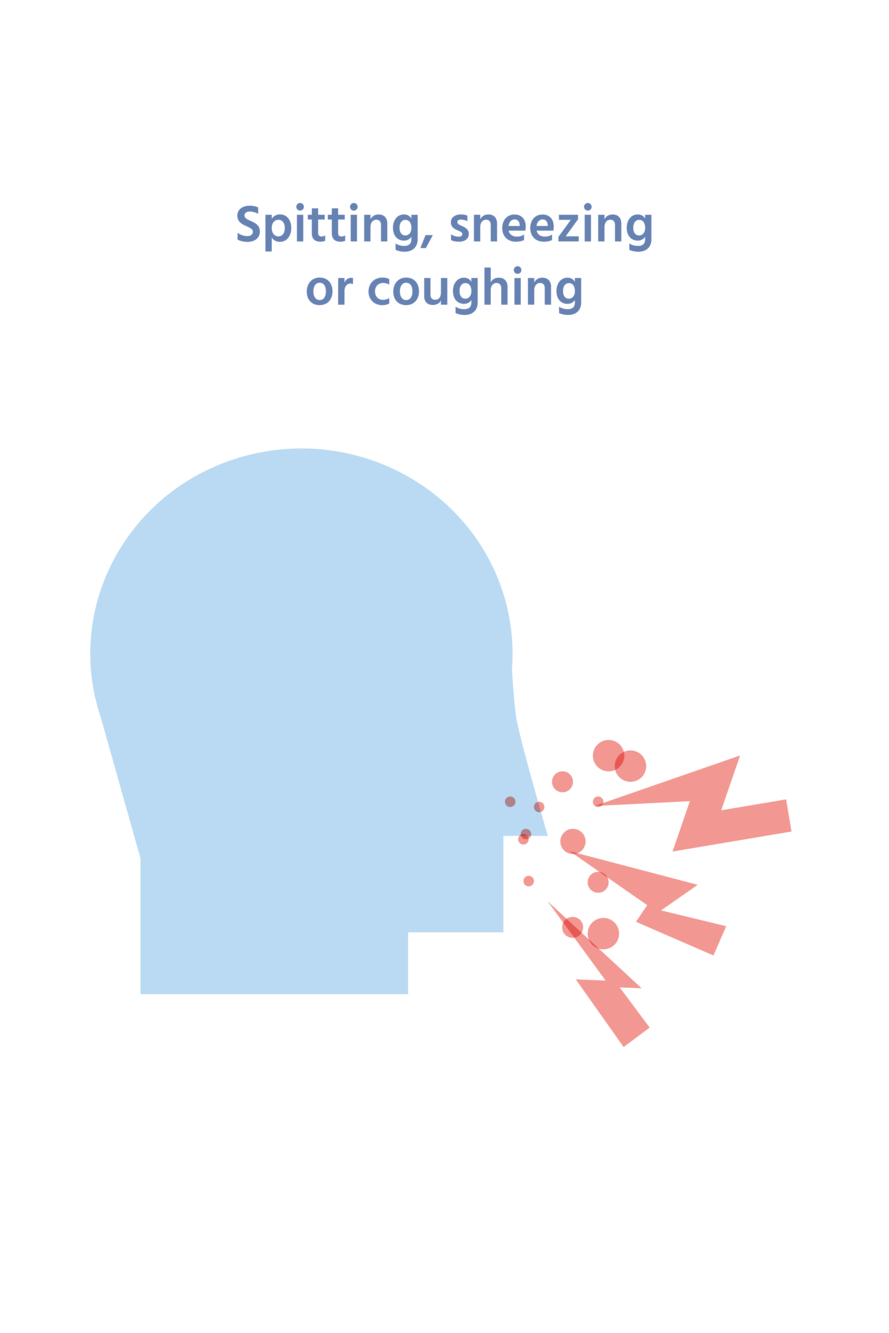
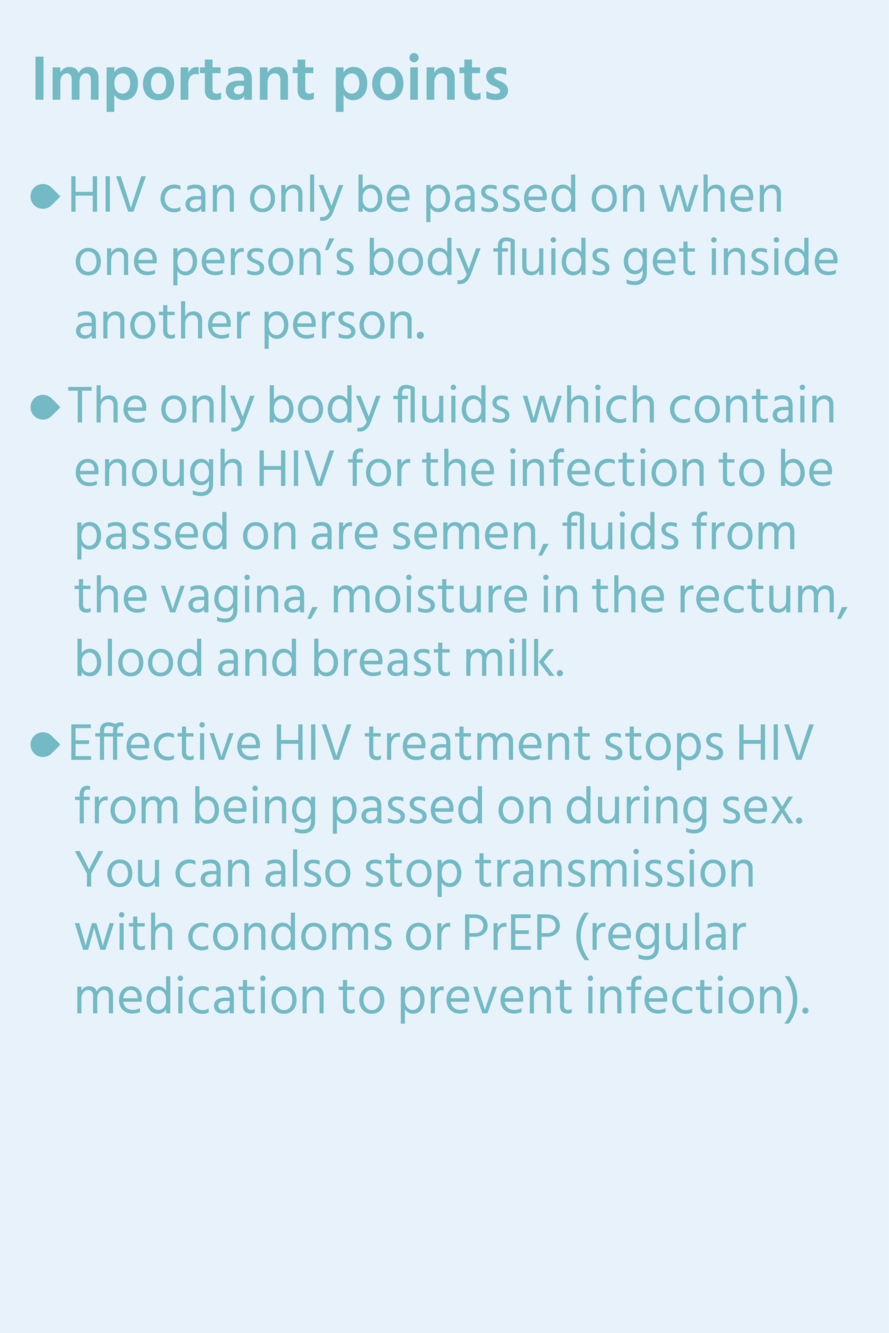
HIV can only be passed on when one person's body fluids get inside another person.

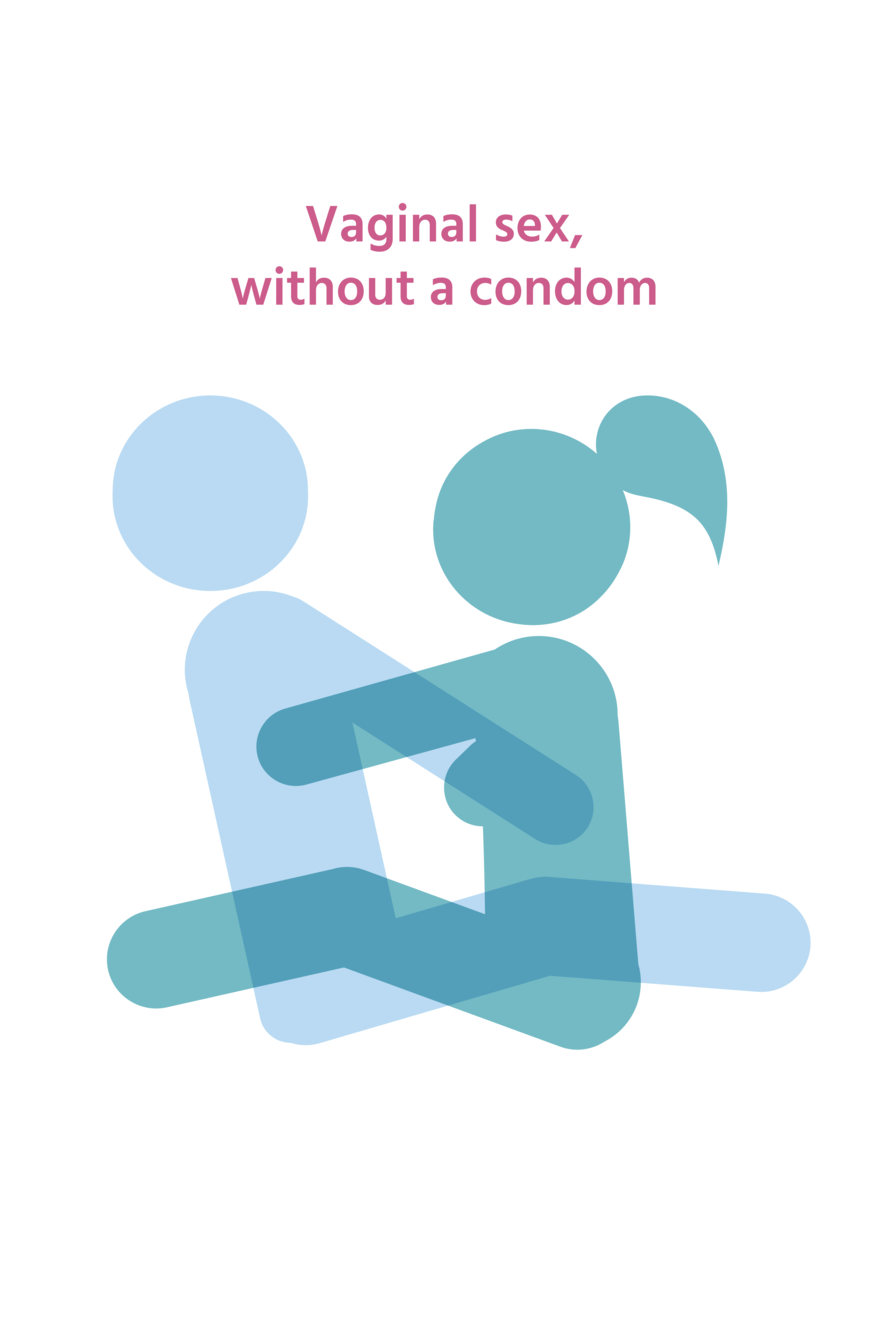
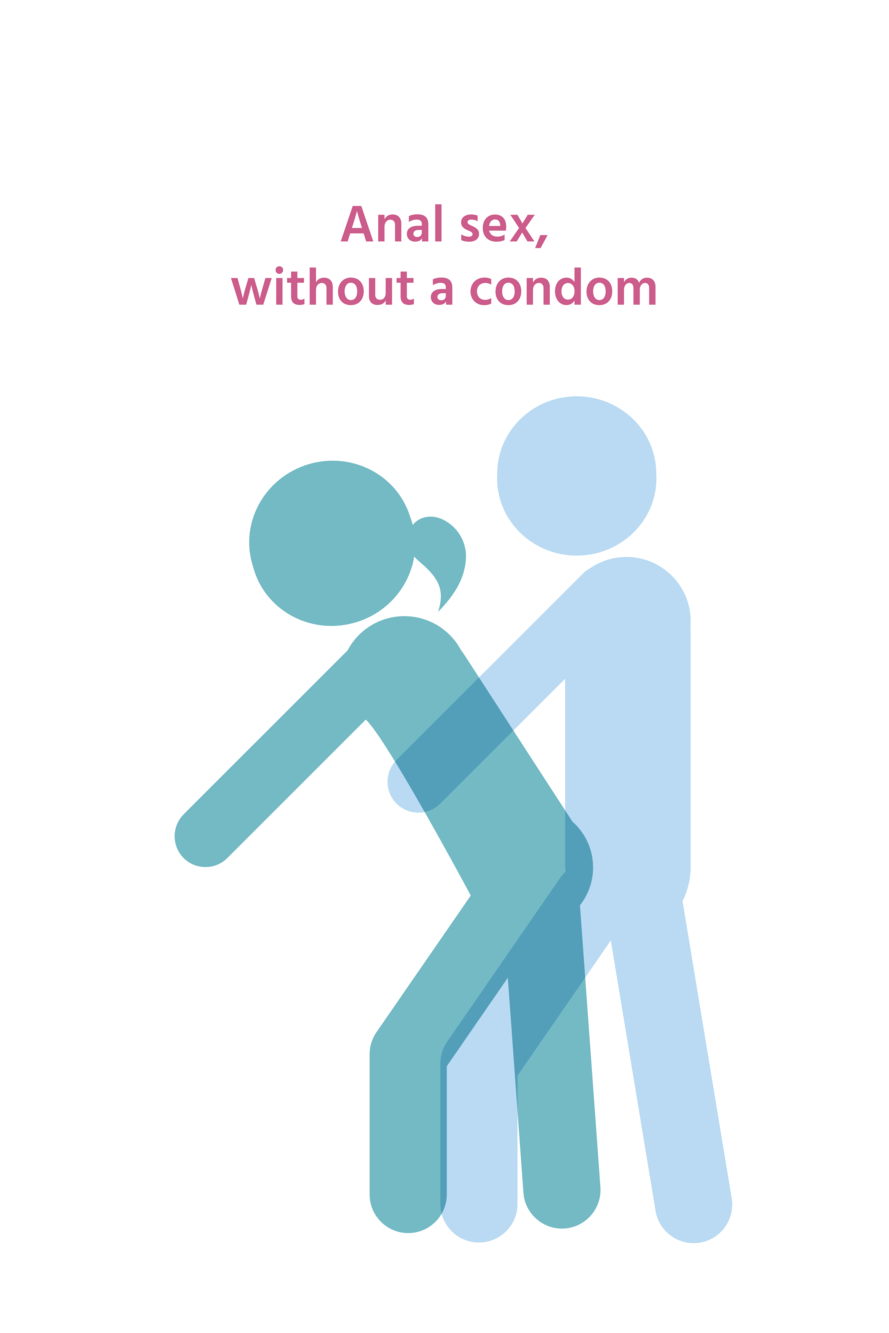
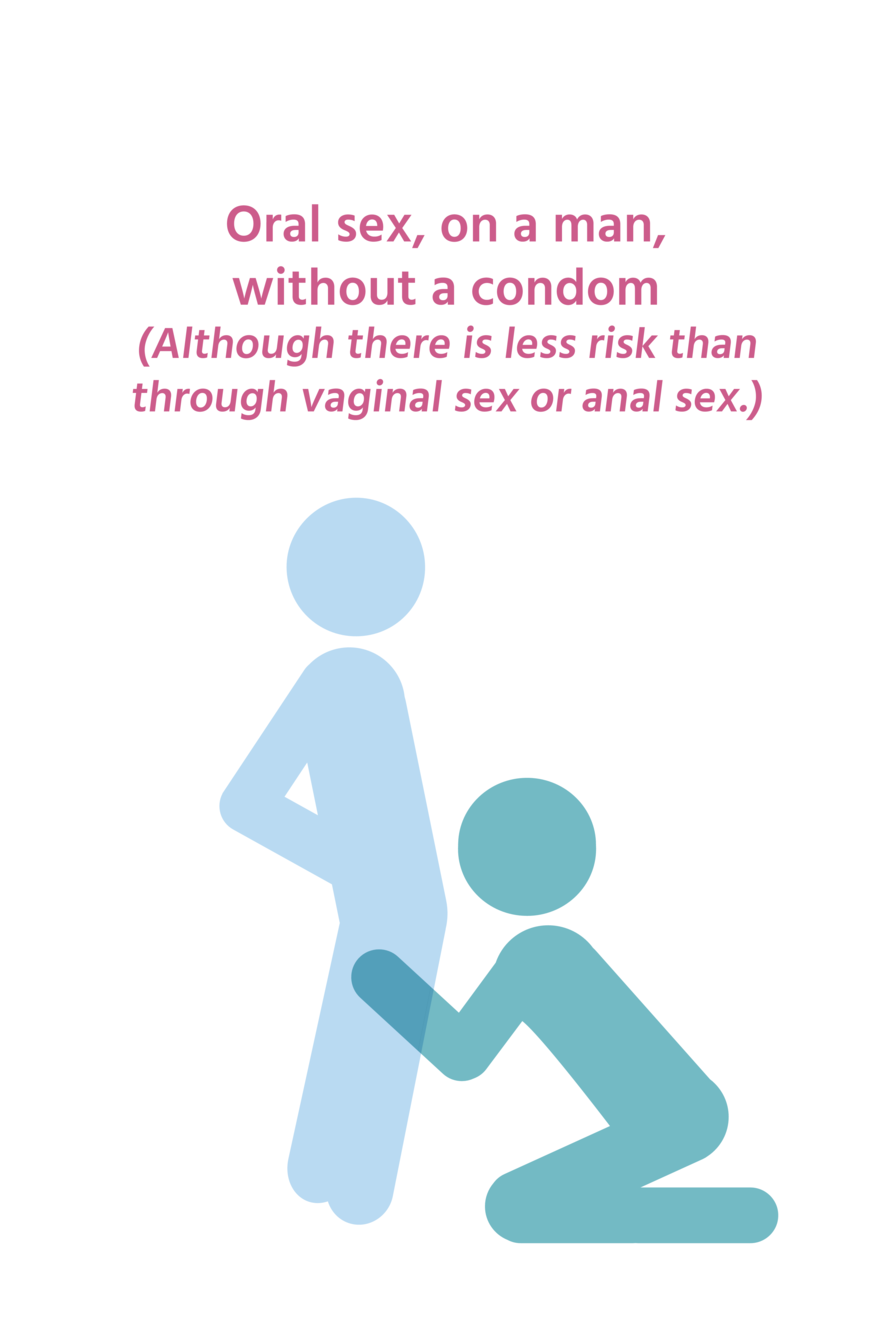
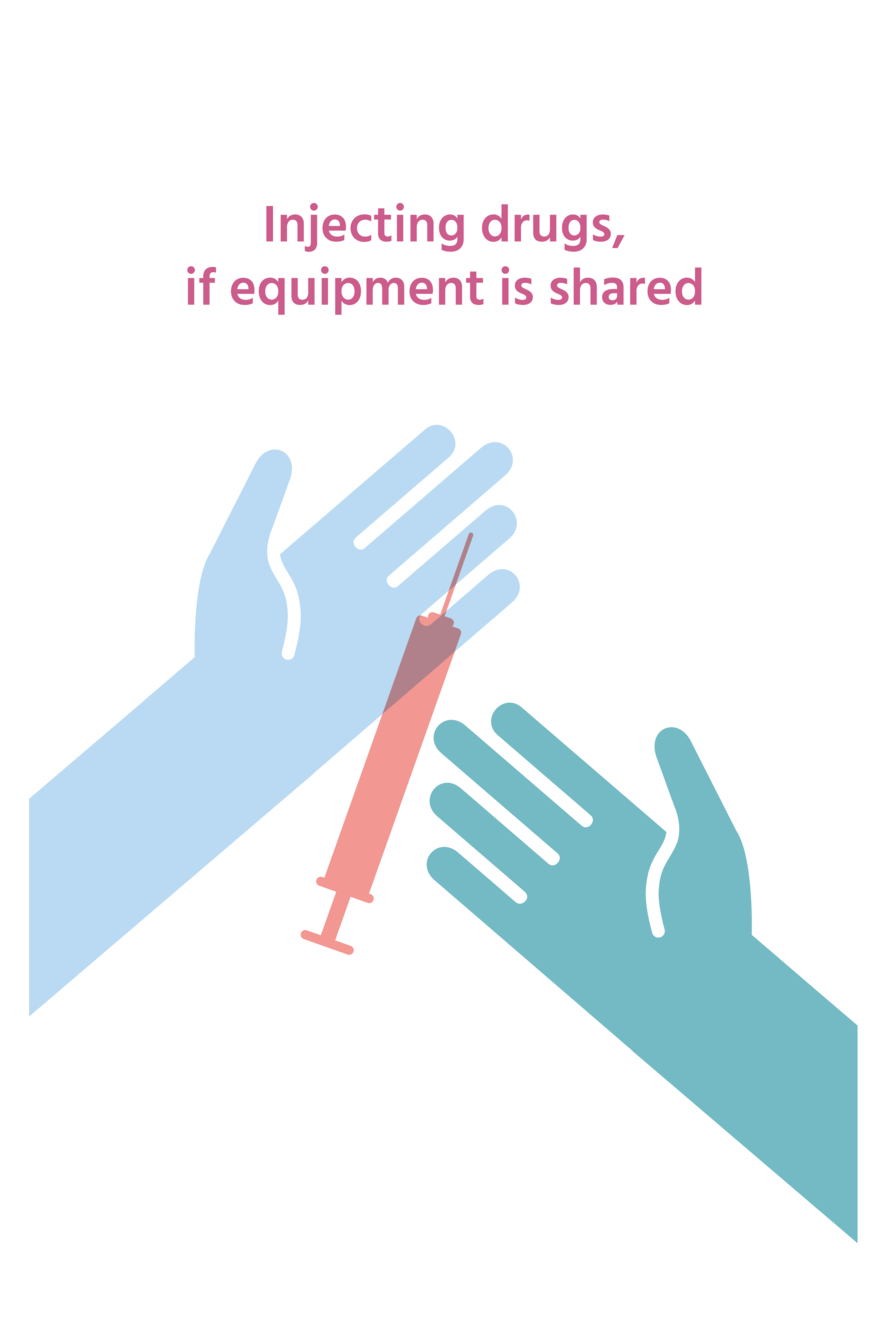
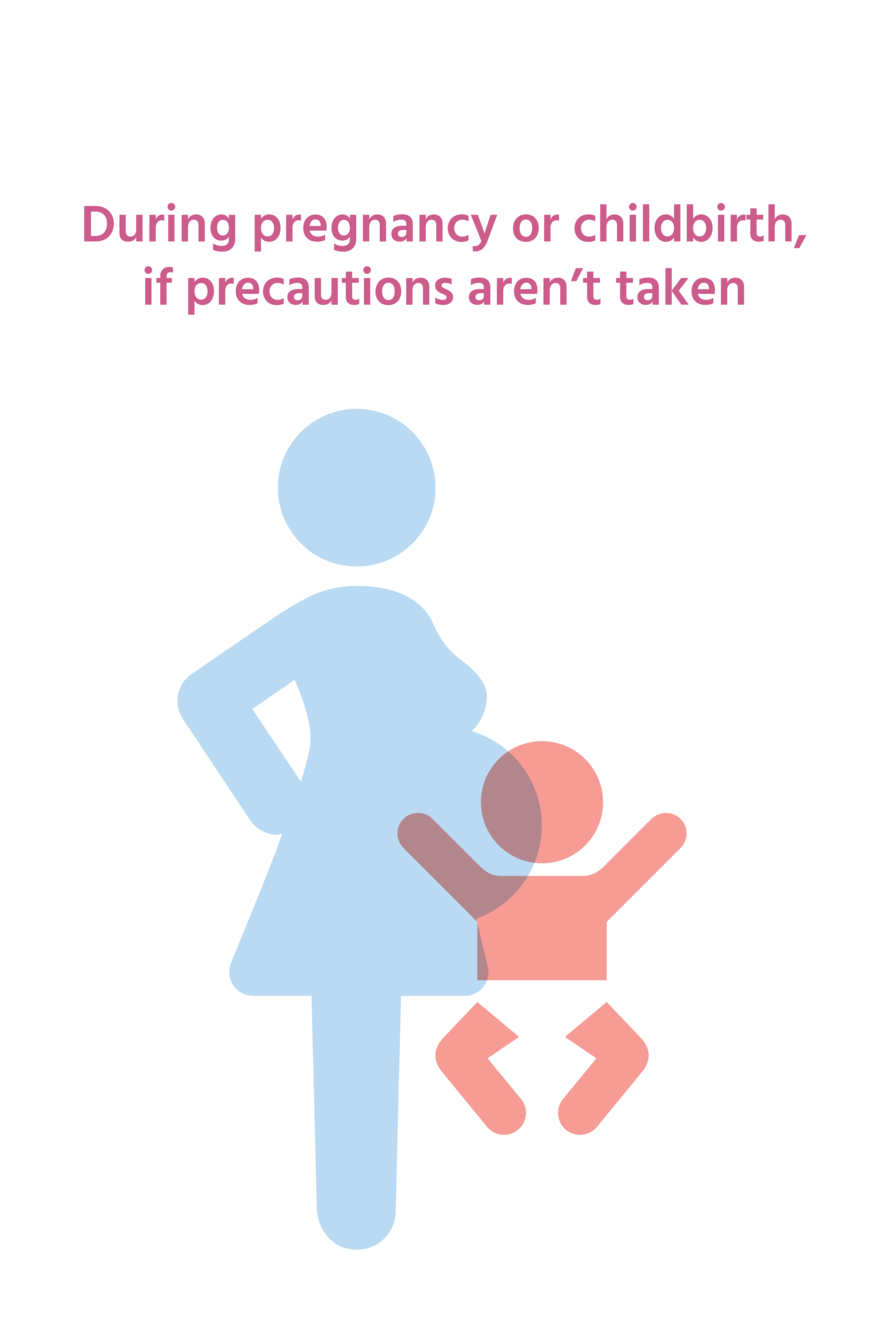
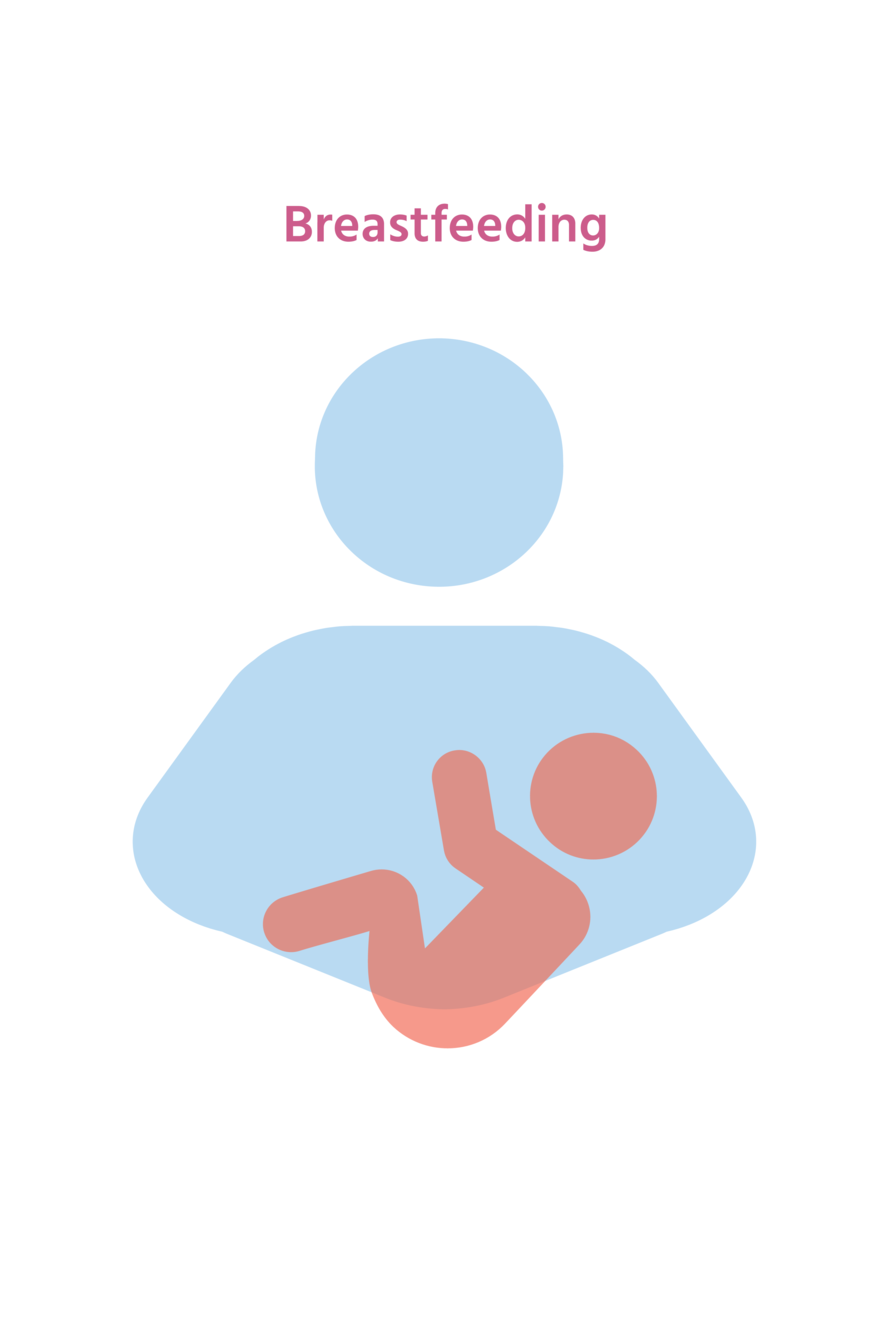
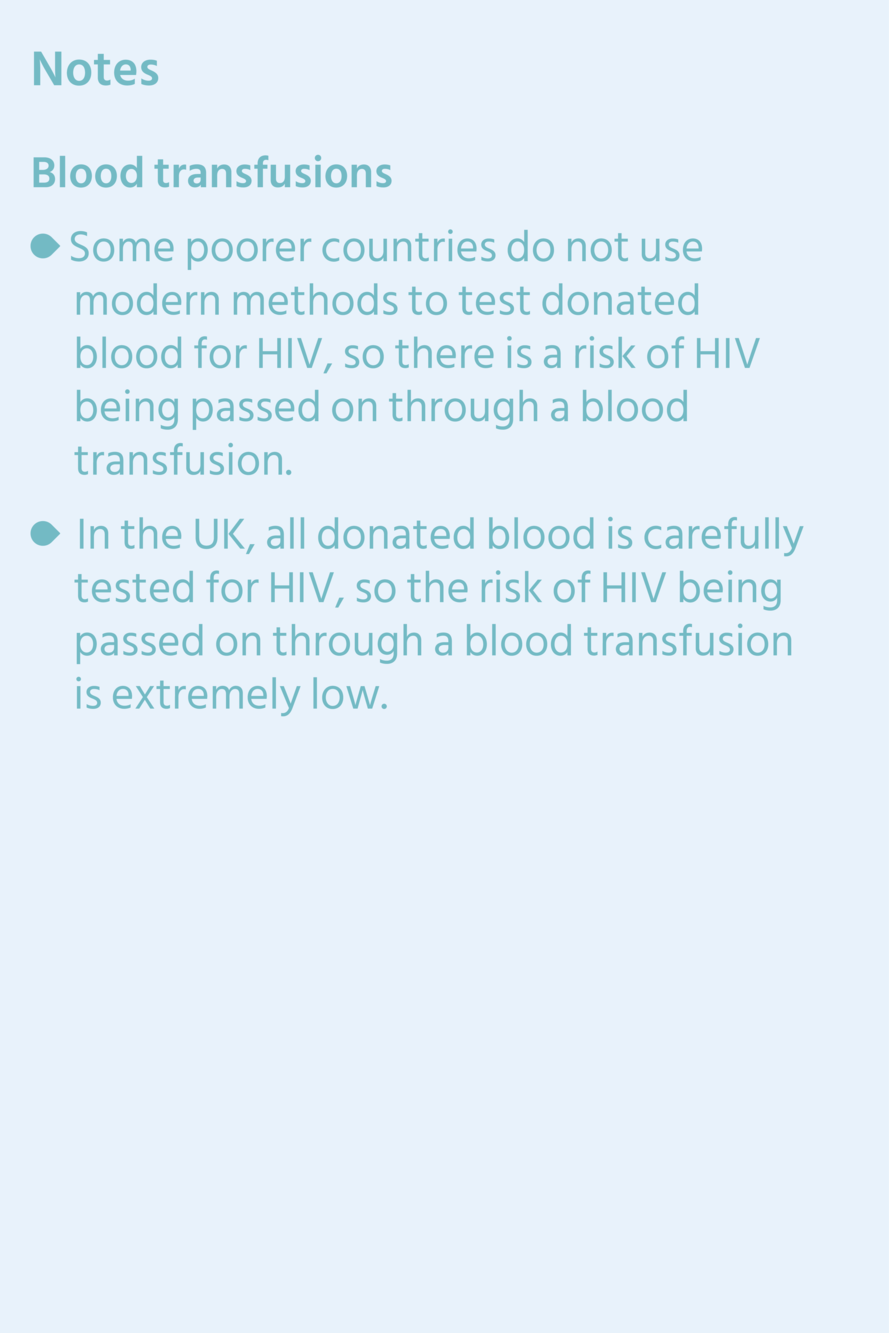
HIV can be passed on during sex without a condom, injecting drug use, pregnancy, birth and breastfeeding.

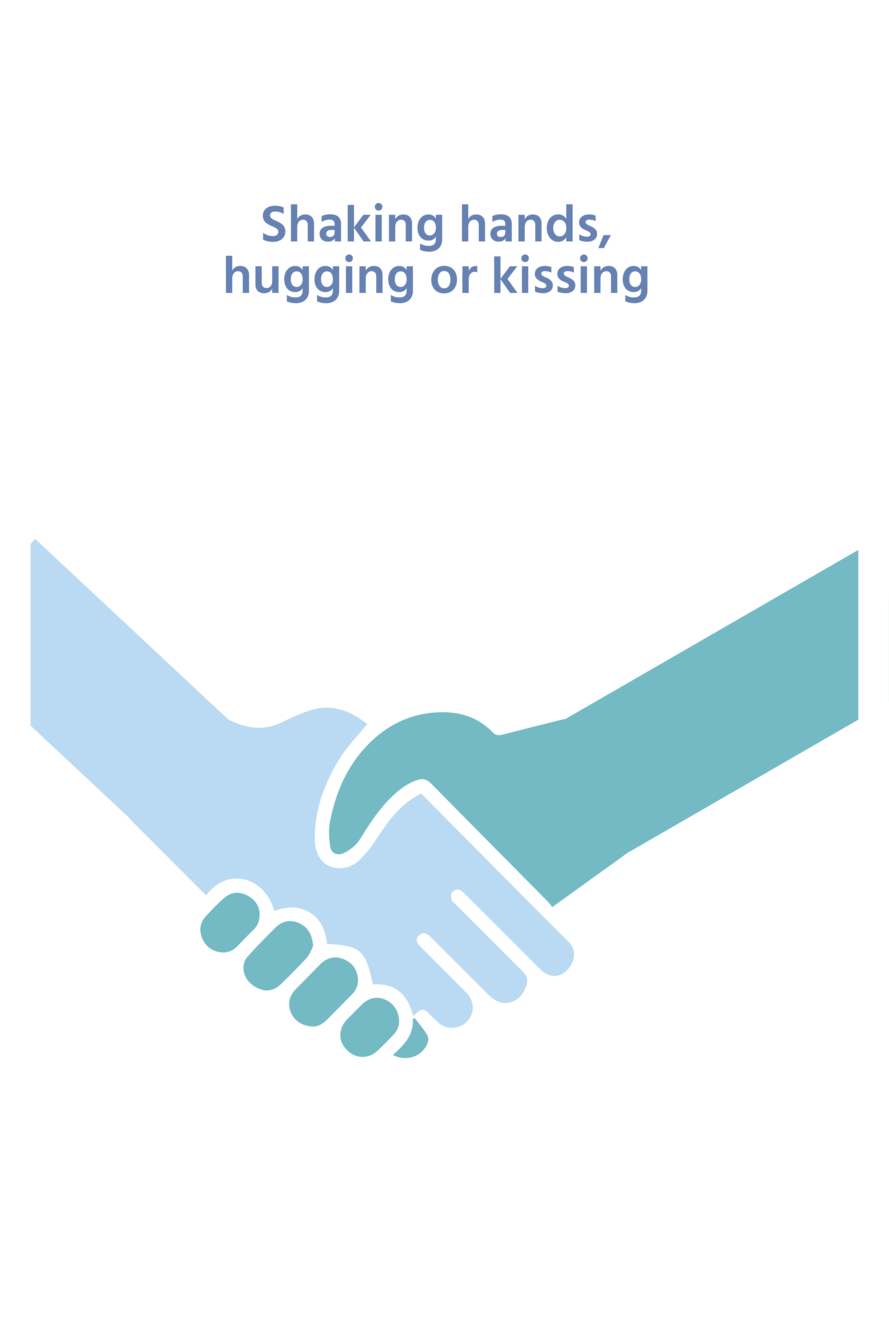
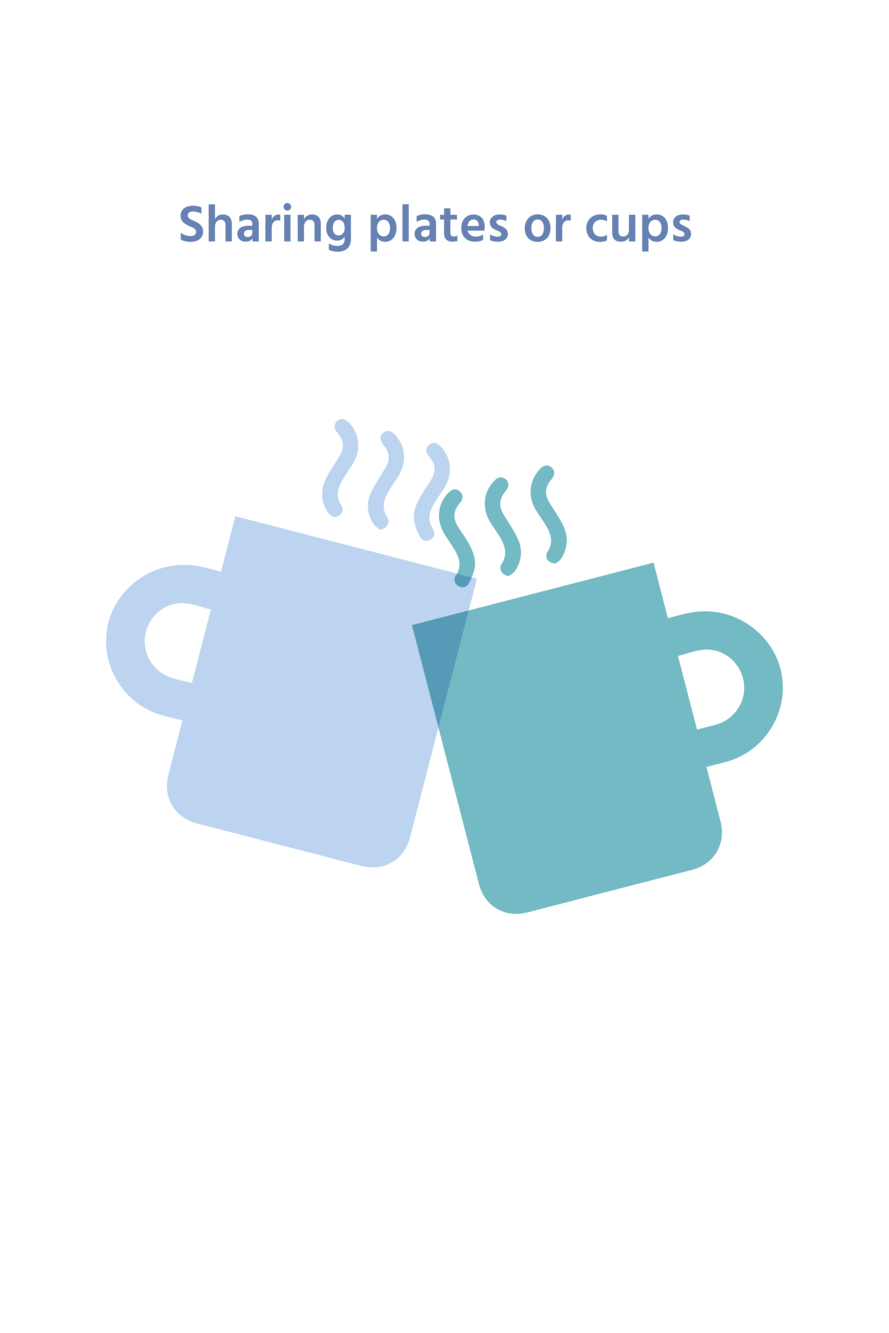
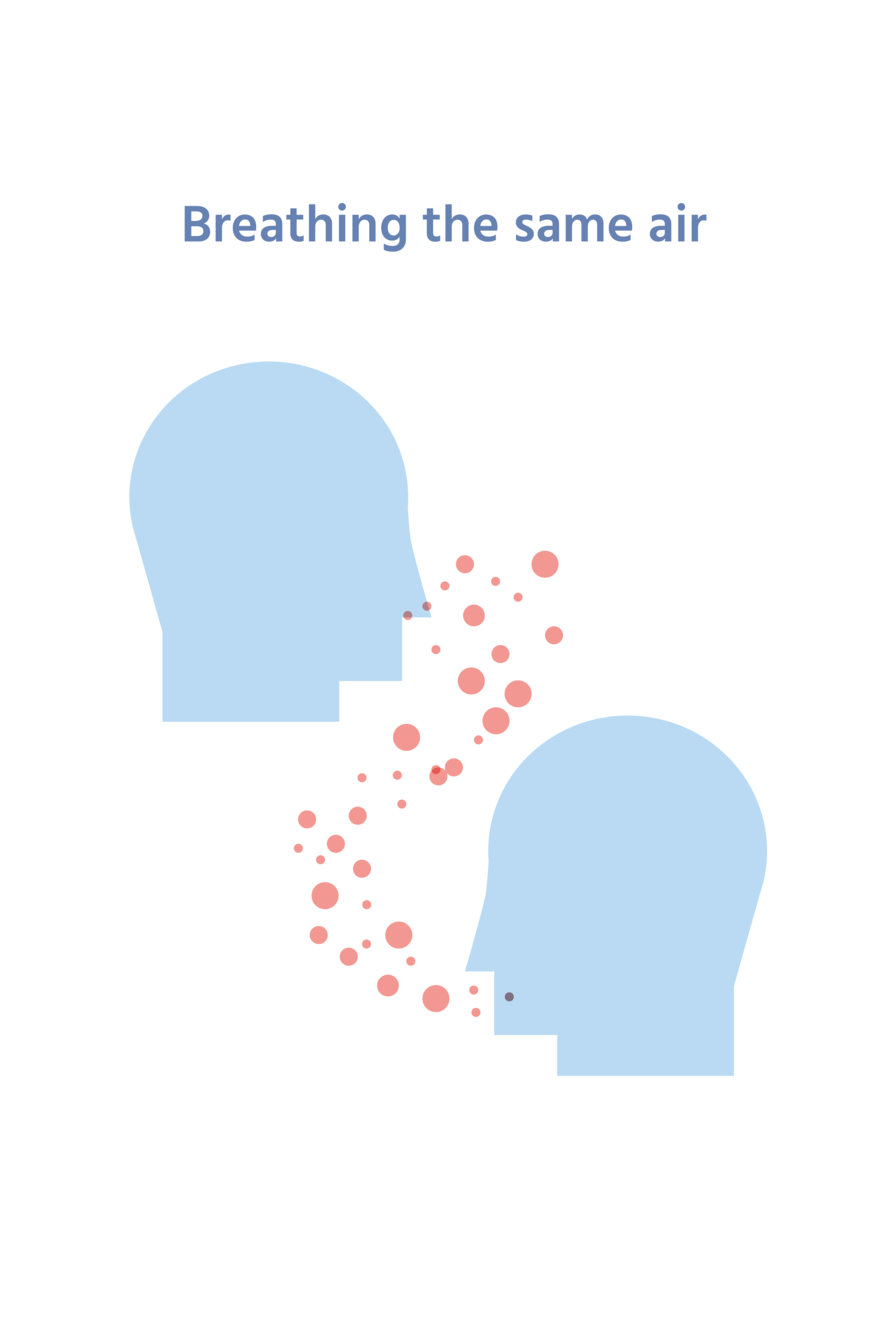
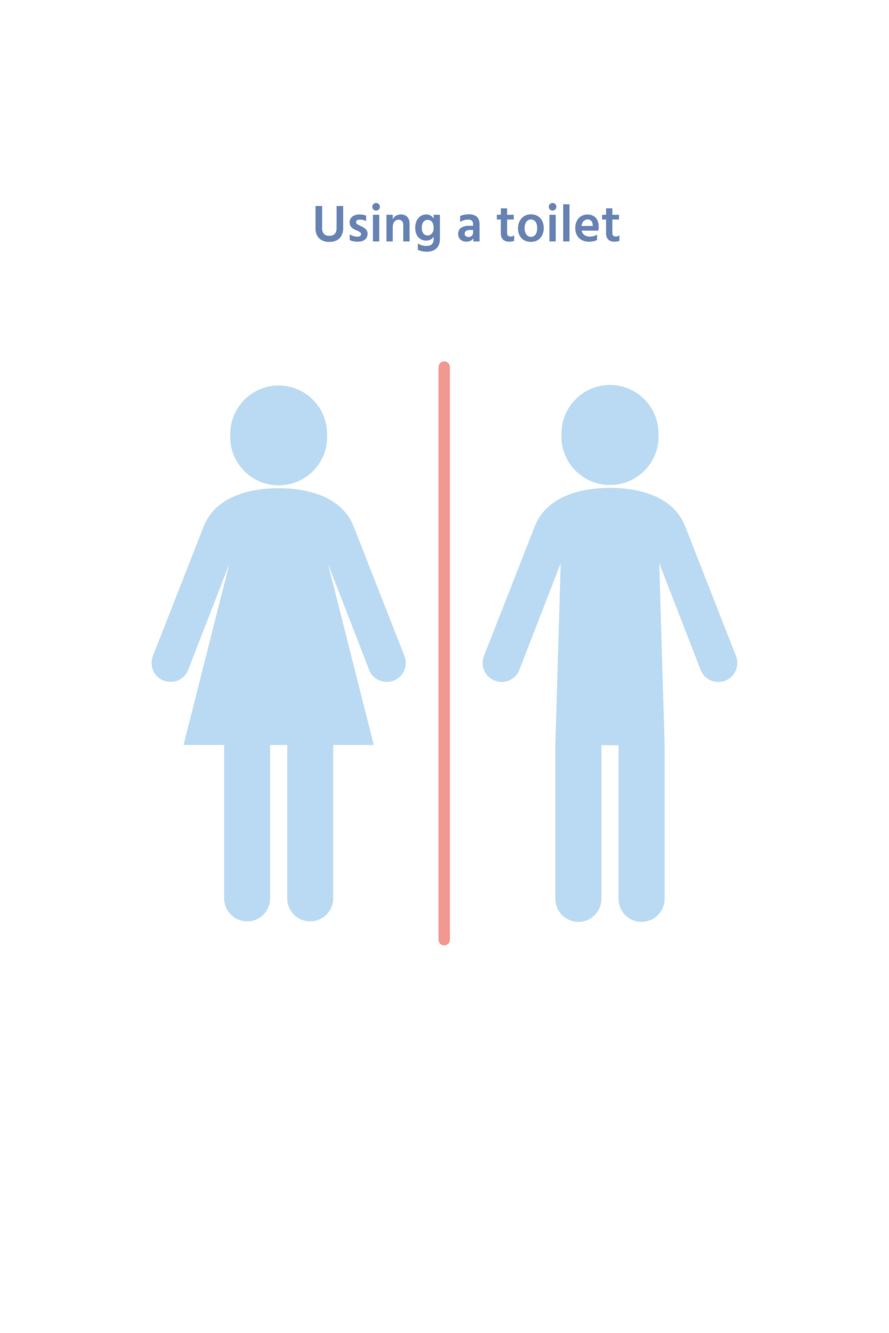
There is no risk of HIV being passed on by shaking hands, using a toilet, kissing, hugging, sharing cups or plates.

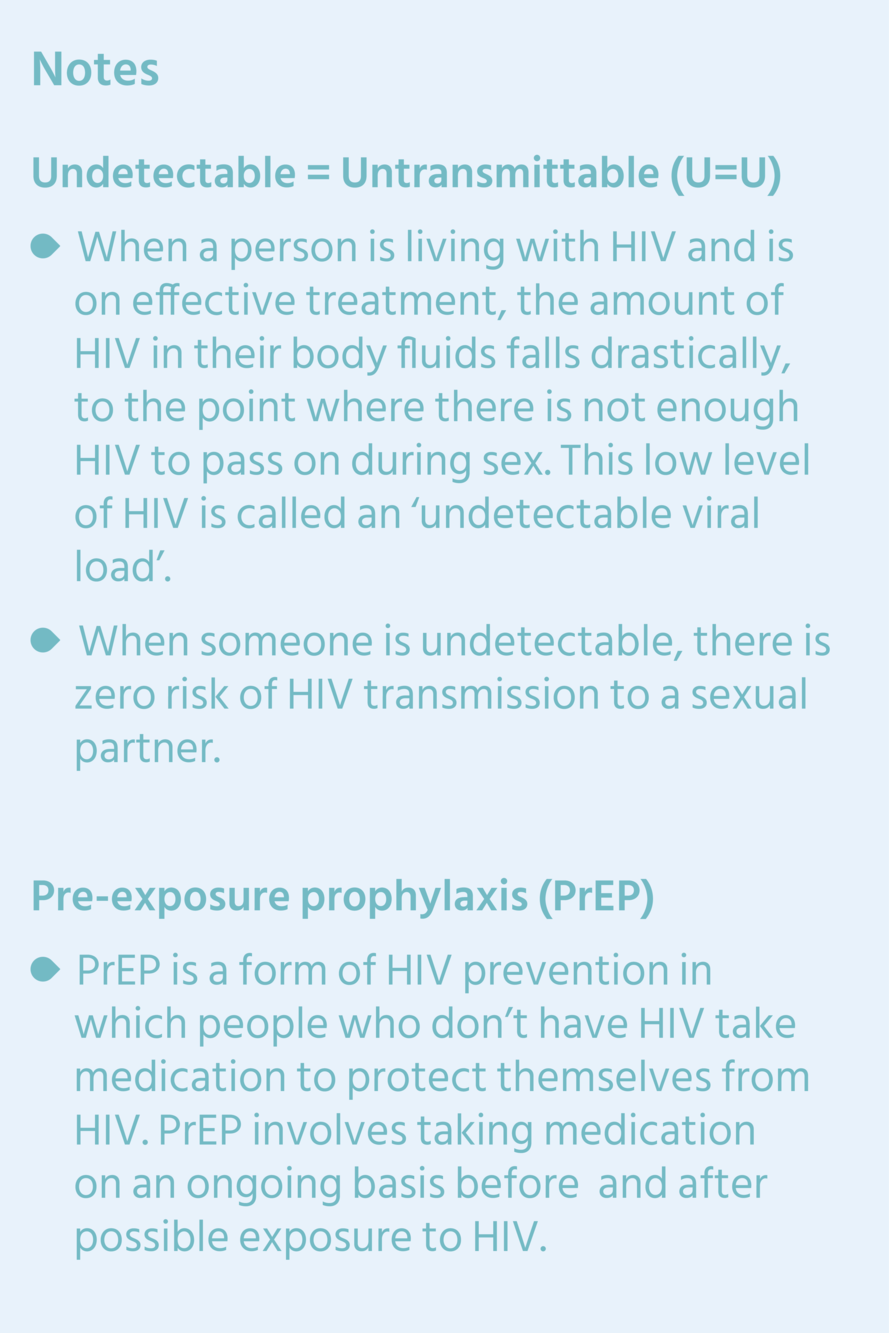
Click here to see our illustrated leaflet giving basic information on HIV transmission facts.

Our information levels explained

  • Short and simple introductions to key HIV topics, sometimes illustrated with pictures.
  • Expands on the previous level, but also written in easy-to-understand plain language.
  • More detailed information, likely to include medical and scientific language.
  • Detailed, comprehensive information, using medical and specialised language.
This content was checked for accuracy at the time it was written. It may have been superseded by more recent developments. NAM recommends checking whether this is the most current information when making decisions that may affect your health.