
'Berlin patient' Timothy Brown has "inspired the field"
Scientists launched a road map for research into an HIV cure ahead of the 19th International AIDS Conference (AIDS 2012) in Washington DC, promising international collaboration and calling for more funding to be devoted to research that can eventually deliver a course of treatment that will, at the minimum, allow people with HIV to remain off medication for life even it can’t eradicate HIV from the body.
The Towards an HIV Cure declaration marks a substantial shift in the scientific consensus regarding the feasibility of HIV cure research. Over the past four years funding has begun to flow towards small intensive studies that will contribute towards cure research. Worldwide attention has been grabbed by the case of the 'Berlin patient', Timothy Brown, who was pronounced cured of HIV infection after a gruelling course of chemotherapy, immunosuppressive treatment and a bone marrow transplant from a donor with a rare genetic resistance to HIV infection. (See here for a full explanation of this case.)
“I don’t think anyone would want to go through what he went through to get that cure, but it has inspired the field,” Dr Steven Deeks of the University of California San Francisco, told a press conference launching the International AIDS Society’s cure research strategy prior to a pre-conference symposium, Towards an HIV Cure.
Support for a comprehensive effort to cure HIV infection is also driven by the mounting long-term cost of HIV treatment. By 2015, US$24 billion will be required to provide treatment for 15 million people; at least 35 million people are estimated to be infected with HIV, and eventually all will be eligible for HIV treatment. A cure which can be feasibly delivered at a large scale in countries with weak health systems, and which is affordable, will begin to look more and more attractive to major international donors as treatment costs continue to rise.
What do scientists mean by an HIV cure?
An HIV cure requires either the clearance of HIV from every cell in the body, or the establishment of a sufficiently strong immune response to keep HIV in check when medication is stopped. The difficulty of achieving eradication of the virus lies in the fact that HIV can remain latent within CD4+ T-cells and some other immune system cells for many years, and cannot be detected by the immune system. It is only when those cells are activated by an external stimulus that they begin to produce HIV. These cells form a 'reservoir' of latent virus that could cause viral rebound as soon as antiretroviral treatment is stopped. It would take the activation of only a few infected cells to cause viral rebound; the reservoir of latently infected cells probably comprises thousands of cells.
The case of Timothy Brown is the only example of an HIV cure that has been scientifically validated, but even this case raises questions about what a cure means. Scientists talk about two possible outcomes from cure research: eradication, where the virus is cleared from the body, and a 'functional cure', where tiny amounts of virus may persist, but the virus remains controlled without medication.
The HIV field had thought that the case of the Berlin patient represented the first example of HIV eradication, but recent data presented at the International Workshop on HIV & Hepatitis Virus Drug Resistance and Curative Strategies in Sitges, Spain, in June, indicated that some laboratories which had tested samples of plasma and tissue from the 'Berlin patient' Timothy Brown, had been able to detect very low levels of HIV DNA or RNA several years after the interventions. This suggests that HIV has not been completely eradicated from this patient’s body. Yet, not all laboratories were able to detect HIV, and the finding remains controversial.
Professor Sharon Lewin of the Alfred Hospital, Melbourne, commented: “My gut feeling is that it’s not real. My take on it is that the DNA and RNA samples were looked at by labs that are very experienced in this work, and in a sub-set of these laboratories there was some evidence of RNA and DNA, which may or may not be contamination. There may be contamination in the best-run labs. He certainly doesn’t have virus that is infectious or that has rebounded to a detectable level. If it’s real, we still have a fantastic example of a functional cure.”
Dr Steve Deeks said that the findings, which his “gut feeling” tells him to be evidence of real virus, suggest three take-home messages. Firstly, more sensitive tests are needed for measurement in HIV eradication studies. Secondly, immune responses may be the most important indicators of the achievement of a functional cure, even where evidence of virus persists; Timothy Brown’s antibody levels continue to decline, suggesting that not enough HIV is being produced to stimulate immune responses. Finally, all the clinical signs suggest that the patient is doing well in the absence of antiretroviral therapy, again suggesting that any persisting low-level HIV infection that might exist is causing no physical harm.
Indeed, given all the sites and cell types that HIV may infect, a functional cure may be more feasible – and may be perfectly satisfactory for people with HIV, depending on how that affects their everyday lives.
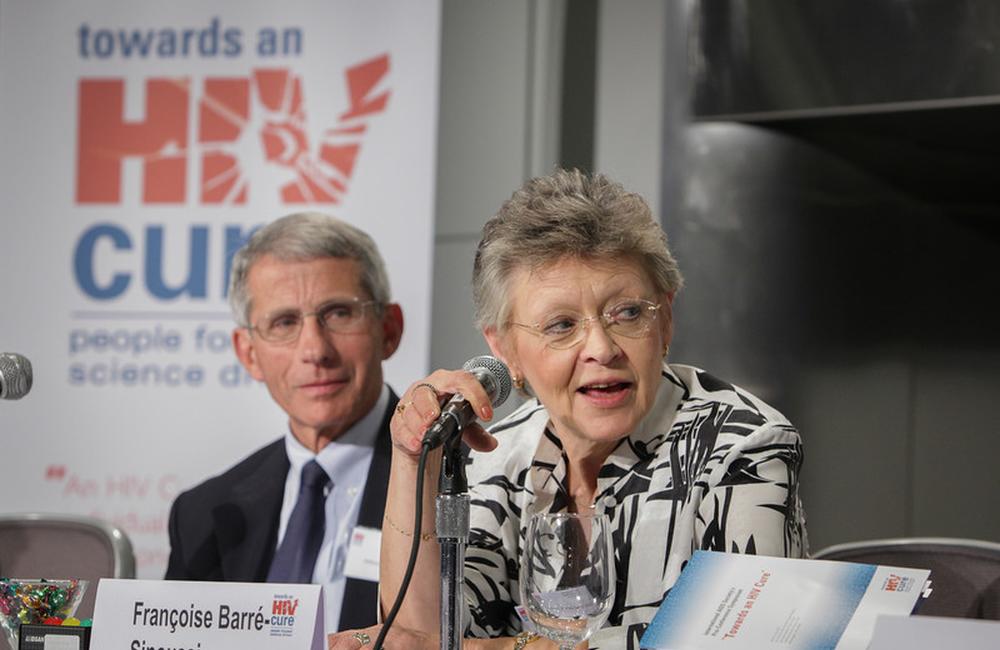
“I asked patients in Asia recently what they wanted and they didn’t say a cure, they said 'a treatment I can stop',” Professor Francoise Barré- Sinoussi told the press conference.
Research conducted among people living with HIV in the Netherlands, on the other hand, suggests that when presented with different attributes of a potential curative course of treatment, people want a treatment that removes long-term uncertainty about health and side-effects, ends stigmatisation and ends the risk that they will infect partners. People living with HIV rate the psychosocial benefits of a cure very highly when asked to rank a range of possible health and psychosocial benefits, Fred Verdult told the Towards an HIV Cure symposium.
A cure, functional or otherwise, and an end to AIDS will also depend on reaching people who have HIV: those who know it and those who don’t. “What would a cure have to look like to access that group of people who are currently not either diagnosed or on treatment?” asked Steven Deeks.
Path to a cure
Views differ on what might be the most productive approach towards curing HIV infection, and researchers emphasise that there is still a great deal of ground to be covered. Tony Fauci, director of the US National Institute of Allergy and Infectious Diseases, described the 'false start' of the mid-1990s, when some researchers assumed that viral suppression on HAART, and the absence of new rounds of infection or evolving HIV DNA, meant that replication had been halted and that eradication was only a question of waiting a few years for all the HIV-infected cells to die a natural death. Robert Siliciano and others soon demonstrated that HIV was infecting cells that might persist for years, and that estimates of HIV eradication after a few years of HAART were wildly optimistic.
All researchers agree that a cure, functional or otherwise, will depend on a combination of approaches. Where they disagree is on the ingredients of the cocktail.
A cure for every patient will need to start with a prolonged period of antiretroviral therapy to reduce HIV to undetectable levels. This period of treatment itself could be important in determining the success of subsequent drug therapies. Will attempts to purge the HIV reservoir be more successful in people who began treatment very soon after infection? A French cohort has produced tantalising data suggesting that some people treated in acute infection can stop treatment and go for very long periods – an average of 72 months so far – without experiencing viral rebound. What is it about these people that prevents viral rebound? Is it the time they started treatment, their genes, or just random chance?
Scientists are also interested to learn whether any form of intensified antiretroviral drug regimen could shrink the pool of latently infected cells, making them easier to purge later. So far, studies have shown little or no impact of regimens drawing on the maximum number of drug classes on the size of the reservoir of latently infected cells, but further studies are planned, using more sensitive measurement techniques, to see whether five-drug combinations that target every possible step in the viral lifecycle have more effect.
Studies are also underway or planned to determine the extent to which the viral reservoirs can be emptied by using a range of drugs that will activate latently infected cells so that they can be identified and killed by the immune system, or self-destruct.
Sharon Lewin of the Alfred Hospital, Melbourne, described the range of studies already taking place using compounds called HDAC inhibitors, which stimulate latently infected cells to begin producing HIV. A number of experimental studies with HDAC inhibitors are already underway, most notably with vorinostat (SAHA). This drug is already approved for the treatment of cutaneous lymphoma, and is currently undergoing phase II tests for a range of other malignancies, so its short-term toxicities are well characterised. In vitro toxicity studies suggest a potential long-term risk of malignancy, but at this point no human studies have reported an increased risk of malignancy. Sharon Lewin’s team is studying the effect of 14 days of vorinostat (SAHA) in 20 patients with fully suppressed viral load, and will measure the effect of vorinostat on cell-associated HIV RNA to determine the effect of the drug on HIV latency.
Professor David Margolis at the University of North Carolina is conducting a similar experimental study, measuring the effect of a sequence of single doses of vorinostat on virus production in up to 20 volunteers with fully suppressed viral load. Steven Deeks at the University of California San Francisco is testing the anti-alcohol agent disulfiram, which also activates latently infected cells. Preliminary data presented at CROI in 2012 showed that this agent stimulated HIV RNA production in a sub-set of chronically infected patients who received the drug.
In addition to these agents, there are six or seven known targets for therapies that could disrupt HIV latency, and in collaboration with Merck Prof. Margolis's research group has identified 83 compounds with differing mechanisms of action that are being tested for their potential as disruptors of latency. Two other companies, Gilead and Janssen-Tibotec, are also engaged in major screening programmes to identify agents that could contribute towards cure research.
Ultimately a number of different agents may need to be used in combination, said Warner Greene of the Gladstone Institute, San Francisco, in order to target the different points in the transcription pathway that govern the integration and latency of HIV in cells.
Activating agents might also need to be used in combination with a therapeutic vaccine to stimulate the immune system to clear the activated cells, because researchers are still uncertain how long the activated cells will continue to produce virus once activated, and whether cells which are not fully activated are nevertheless capable of producing virus that will go to infect other cells. (Activation is a cycle rather than an on/off process.)
Researchers are also investigating gene therapy approaches that can gradually establish a pool of HIV-resistant CD4 cells. This approach is already being studied in people with HIV, but more work is needed to refine the technique and determine whether this approach can contribute towards an HIV cure.
The long and winding road
Questions of cost and scaleability will loom ever larger as researchers make progress towards a cure, but at this stage leading players are stressing the need for realistic expectations about how long this research will take.
“I can’t tell you how long it will take or how much it will cost, but now we are collaborating, it will take a considerably shorter time,” said Rowena Johnston of AmFAR, who is leading the organisation’s efforts to fund innovative cure research as a means of kick-starting a larger cure research effort.
How much it will cost and how long it will take to get there are matters of pure conjecture at the moment, and advocates and researchers are reluctant to commit themselves on either question. “The reason we don’t want someone saying it’s going to take X million dollars and X years is because we don’t want to over-promise what we can’t deliver. But if we put in more money we will get there sooner,“ said Johnston.
The research effort will also need to overcome the scepticism of a field that has seen several major breakthroughs fail to materialise.
Tony Fauci pointed out how many times the “you can’t do it” school have been proved wrong in HIV research, starting with antiretroviral therapy, all the way through efforts to deliver treatment in the developing world, to the recent PrEP studies. HIV research requires great feats of discovery, but it also requires the discovery of an approach to a scaleable cure to mobilise the resources, he told researchers.
View the webcast of the symposium on the conference website.