
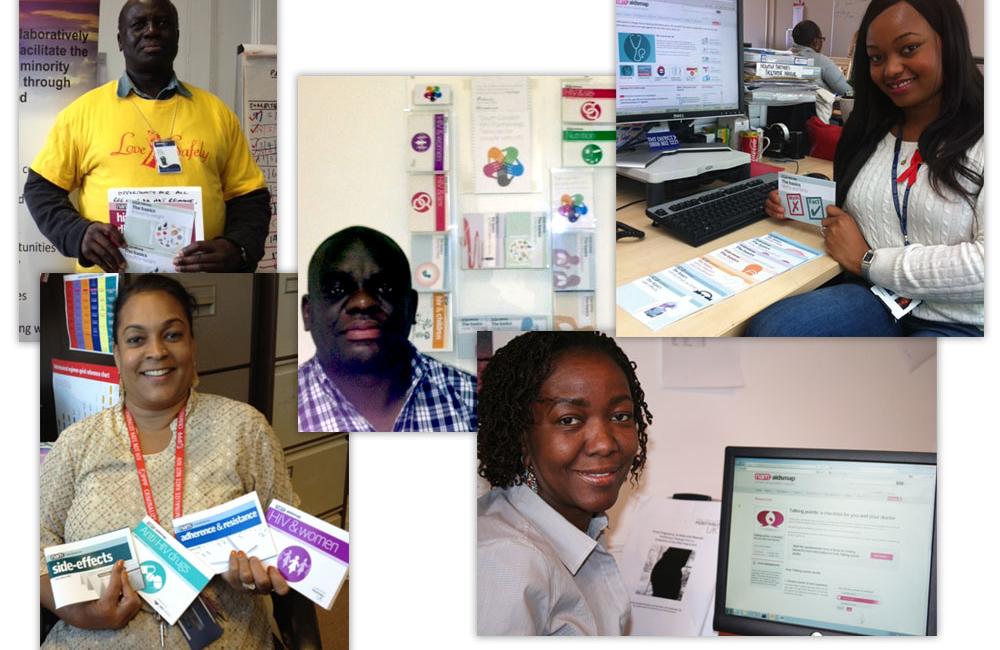
Since I came back from maternity leave, I have been meeting with and talking to colleagues in African community organisations all over London. As well as introducing them to NAM’s range of information resources (that’s if they are not already familiar with them) I agree distribution systems to ensure they have a steady supply of materials. Often African community organisations aren’t aware of the free availability of NAM’s patient information materials so it’s important I let them know how they can easily obtain good quality materials to support their service users.
I also always ask for feedback about our resources, which sometimes identifies new information needs. In the current difficult funding climate I also keep my eyes and ears open to make sure I notice new organisations, and agencies that have merged or closed down, so we can keep our online directory of African organisations up to date.
Feedback on The basics series
It’s very exciting, when visiting African community organisations, to be able to show the new titles from our series of illustrated information resources called The basics. These resources are designed to communicate visually to people through the use of colourful images to engage the reader and to illustrate key points. They give straightforward information, presented simply and memorably, bringing this information to life. The new titles were developed taking into account some of the feedback I had received from African community organisations before I set off on maternity leave.
Below is some of the encouraging feedback we have received from various community workers regarding the usefulness of our resources.
“I have found the NAM resources to be an invaluable and reliable source of information for my work. The basics series has been particularly useful for my African clients whose first language is not English, because the text is in bite-size pieces and the diagrammatic illustration is easier for them to understand. Information in The basics is quick and simple for my newly diagnosed clients to process.
The patient information booklets have been equally useful but more suited for my clients who have the time and are needing more in depth information on a particular area; for example HIV & women for planned parenthood. All of these resources are great for clients to pass on to family or friends they wish to disclose to or educate.” Quinet Akanoh, Health Trainer – African Communities Lead, HIV Health Support Service, Terrence Higgins Trust
“I was introduced to NAM by another colleague, Star Mguni, when I complained about not getting enough information, which made sense, about HIV. So I googled the site and found a little 'utopia'. If NAM would give a little exam and a certificate – who needs a university! I direct both patients and staff to this website for all their HIV needs. I live and breathe NAM. Thank you for the simplicity and clarity with which you present your information.” Kay Francis, HIV Lead Midwife, Coleridge Unit, North Middlesex Hospital
“The resources are indeed very useful and valuable to Opportunity for All and our HIV-positive service users, particularly The basics, because they have several different important topics and they are really spot on.
These resources are really very popular and that is why I keep ordering more and more. A lot of appreciation goes to you and your colleagues on the resource team for producing these excellent free HIV information resources. Thank you.”
Mr Oola Balam, Co-ordinator, HIV Secondary Prevention and Support Service, Opportunity for All
“I am the newly appointed project manager for Positively UK’s project From Pregnancy to Baby and Beyond. The project is aimed at providing education, information and support for prospective, expectant and current mothers living with or affected by HIV. Support is provided by trained mentor mothers in form of one-to-one support; outreach to clinics; and a series of national Pregnancy Journey workshops.
Women living with HIV who test HIV positive during pregnancy or who plan to have a baby after a diagnosis often have a myriad of clinical, practical and psychosocial issues. Two of the key issues they all have to deal with are the doctor-patient relationship and taking HIV treatment, both of which are vital in terms of ensuring prevention of vertical transmission and ensuring that mothers engage in health care both during pregnancy and after the baby is born.
And this is where the NAM resource series The basics becomes invaluable. One of the challenges many find in managing their health care is that they are sometimes not able to ask the doctor the right questions. Especially when starting treatment. Being able to ask the right questions, looking at how treatment fits in with individual circumstances and generally being able to articulate side-effects is extremely important in ensuring adherence to medication. We regularly refer our service users to The basics and many have found them extremely useful. One of the service users said. “I like the booklet because, the language is simple and there’s not too much jargon. It has enabled me to better ask questions to my doctor and even better still, it is small enough to fit in my pocket!” Angela Namiba, Project Manager, From Pregnancy to Baby and Beyond, Positively UK
"I find NAM's resources extremely handy as they cover a wide range of subjects and our service users find them easy to read and understand."
Samuel Serunjogi, First Point, South London HIV Partnership
Talking points
We also have a new resource called Talking points, which supports people with HIV to have informed discussions with their doctor regarding their treatment options and help identify health and lifestyle issues that might affect their treatment choices. I have been promoting this new interactive resource to African community organisations during my visits as, often, African people are less familiar with the concept of the doctor-patient dialogue, and the evidence suggests that the more people are able to participate in decisions about their treatment and care the better their health outcomes.
Talking points encourages people living with HIV to:
- have open discussions with their healthcare team
- feel more confident talking to their healthcare team
- feel better equipped to take decisions regarding their treatment and care
My job at NAM involves gathering information and ensuring the voices of African people with HIV are included in the design and development of our information resources. I am so pleased and grateful for all the help we have had from people living with HIV and community organisations in developing these new resources. Thank you!
For more information
If you are an individual or organisation working within the African community and offer services to African people with HIV, please get in touch with me. If you regularly subscribe to NAM’s print and online resources, I would be very pleased to hear your views and comments on these resources. I look forward to meeting you all very soon!
Please contact me for more details by email jackie@nam.org.uk or call me on 020 7837 6988.
Jackie leads NAM’s African Communities Engagement Project, which is funded by the National Lottery through the Big Lottery Fund and the Henry Smith Charity.