
Key points
- The sensitivity of a test is the percentage of results that will be correctly positive when HIV is actually present. Lower rates of sensitivity will produce more false negative results.
- The specificity of a test is the percentage of results that will be correctly negative when HIV is not present. Lower rates of specificity will produce more false positive results.
- Both the sensitivity and specificity of the HIV tests that are widely used in the UK and comparable countries are usually above 99%.
Sensitivity
The sensitivity of an HIV test is defined as the proportion of people with HIV who will receive a positive result. In other words, a highly sensitive test is one that correctly identifies people living with HIV who take the test.
- A test that is 100% sensitive would identify all HIV-positive people who take the test.
- Many HIV tests have 99% sensitivity. A test with this sensitivity would identify 99% of HIV-positive people, but would miss 1% of them. They would get ‘false negative’ results.
- A sub-optimal test, with only 94% sensitivity, would identify 94% of HIV-positive people, but miss 6% of them.
If you have a negative result on a highly sensitive test (for example, over 99%), it is highly unlikely you have HIV.
However, if you have a ‘reactive’ or ‘positive’ result, even with a sensitive test, that result needs to be confirmed with follow-up testing. If you rely on a single test result, it could be a false positive.
Specificity
The specificity of an HIV test is the proportion of people without HIV who will have a negative result. In other words, the specificity of a test refers to how accurate the test is when used by HIV-negative people.
- A test that is 100% specific would give a negative result to all HIV-negative people who take the test.
- Many HIV tests have 99% specificity. A test with this specificity would give correct results to 99% of HIV-negative people, but ‘false positive’ results to 1% of them.
- A sub-optimal test, with only 94% specificity, would give a negative result to 94% of people who don’t have HIV, but ‘false positive’ results to 6% of them.
The balance of sensitivity and specificity
In general, sensitivity and specificity exist in a state of balance. Increased sensitivity (the ability to correctly identify people who have HIV) usually comes at the expense of reduced specificity (meaning more false positives). Likewise, high specificity usually means that the test has lower sensitivity (more false negatives).
Therefore, healthcare services use a two-part testing procedure: a test with high sensitivity (to detect as many HIV-positive individuals as possible, allowing some false positives but very few false negatives), followed by a confirmatory test with high specificity (to eliminate as many of the false positives as possible).
How sensitive and specific are HIV tests?
Data on the sensitivity of tests are usually based on the detection of chronic (long-standing) HIV infection. A test that is highly sensitive to chronic infection may not perform so well in relation to acute (recently acquired) HIV. The period in which a test cannot reliably detect recent infection is known as the window period. For more information on testing people with recent infection, see our page on window periods.
"If you have a negative result on a highly sensitive test, you can rule out HIV."
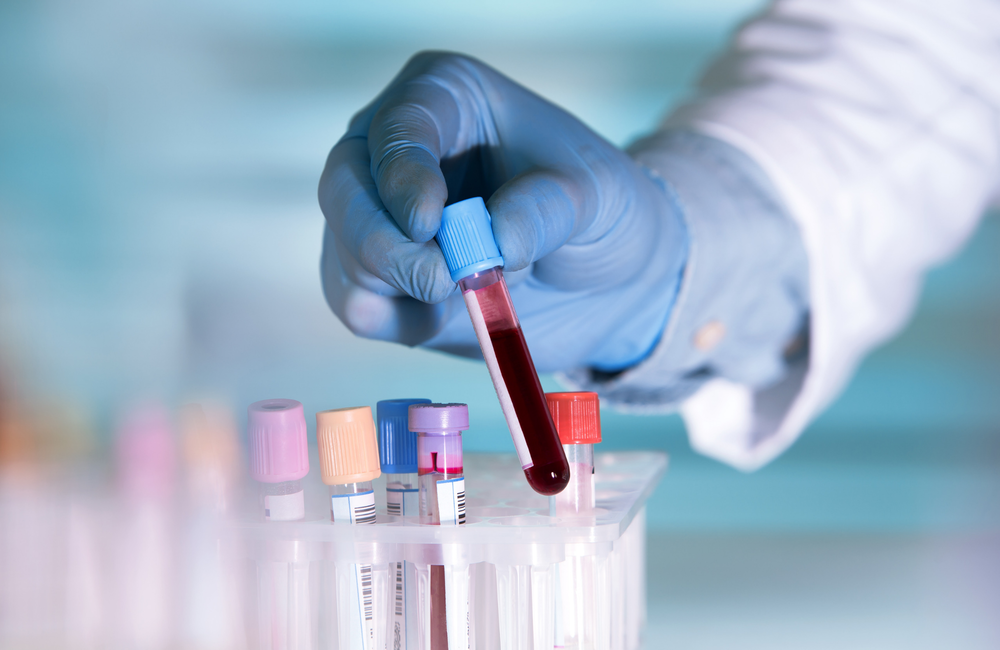
Fourth-generation laboratory tests use a sample of blood and are the recommended tests in UK and US guidelines. These tests can detect both HIV antibodies (proteins produced by the immune system in response to a foreign substance) and p24 antigen (a protein contained in HIV's viral core that can be detected sooner than antibodies). Commonly used tests of this type include Abbott Architect HIV Ag/Ab, GS Combo Ag/Ab EIA and Siemens Combo HIV Ag-Ab. In virtually all studies, both sensitivity and specificity are above 99.5%, and are frequently reported as 100%. While third-generation laboratory tests are no longer recommended, they have similar sensitivity and specificity in relation to chronic infection. For more information, read our page on fourth-generation tests.
A wide range of rapid, point-of-care tests have been produced. Most can only detect antibodies, although some can also detect p24 antigen. There are considerable variations in the sensitivity and specificity of tests that are available around the world. However, the evaluation data that are available for tests that either have European CE marks or are approved by American regulators are more encouraging. World Health Organization evaluation of the Alere Determine HIV-1/2, Uni-Gold HIV, INSTI HIV-1/HIV-2 Antibody Test and SD BIOLINE HIV-1/2 3.0 found that all had a sensitivity and a specificity in the range of 99-100%. The sensitivity of the OraQuick Rapid HIV-1/2 is a little lower, especially when using oral fluid samples. For more information, read our page on rapid tests.
Most self-testing devices are modified versions of rapid, point-of-care test kits that were originally designed for healthcare professionals. They have comparable sensitivity and specificity to the point-of-care tests. For more information, read our page on the accuracy of self-testing.
Self-sampling is different from self-testing. It involves you collecting your own sample and sending it to a laboratory for analysis. Fourth-generation assays are usually used to test the samples, so self-sampling can be expected to have the same sensitivity and specificity as fourth-generation laboratory tests. For more information, read our page on the accuracy of self-sampling.