
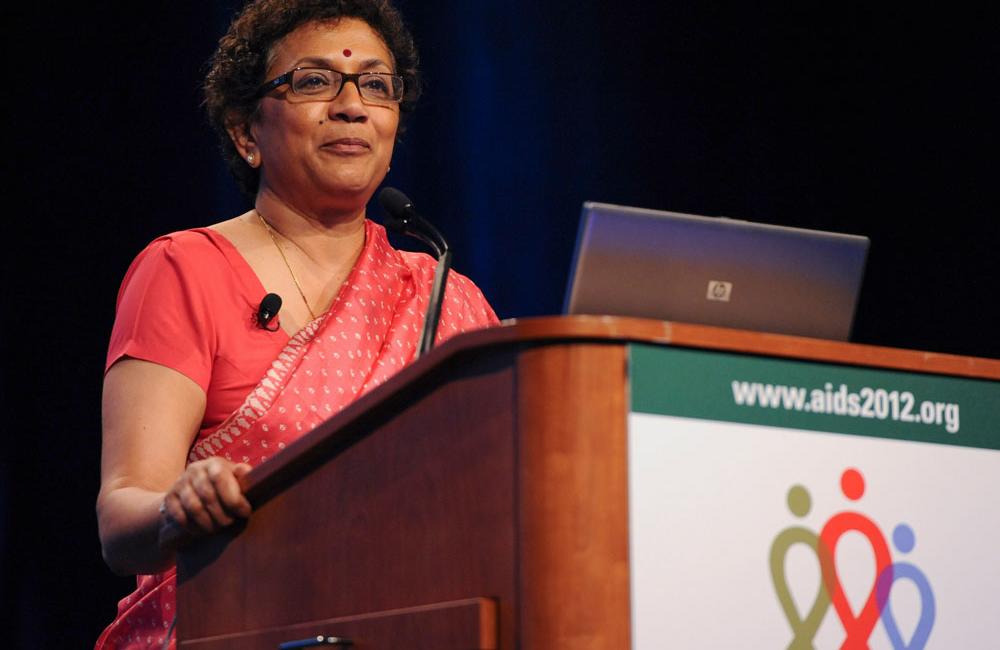
Providing free school uniforms to enable children to stay in school, in addition to exposing primary school students to the national HIV/AIDS prevention curriculum, appeared to have a greater effect on reducing risky sexual behaviours among youth and in particular girls in Western Kenya than either intervention alone, Dr Vandana Sharma reported on Wednesday at the 19th International AIDS Conference (AIDS 2012) in Washington.
The randomised trial comprised over 19,000 youths (50% female) enrolled in one of 328 primary schools from 2003 to 2006. The follow-up cross-sectional survey looking at herpes simplex virus 2 (HSV-2) prevalence and behavioural outcomes took place between February 2009 and March 2011, six to seven years after the intervention.
Adolescents aged 15 to 24 years of age account for close to 40% of all new HIV infections worldwide By the end of 2010, there were 4.8 million young people living with HIV, of whom 3 million or close to 70% were young women and girls. More than half of the estimated 75 million children not in primary school worldwide are girls.
Successful prevention of new infections in adolescents will have a significant affect on the adult epidemic and on new paediatric infections.
Early adolescence offers a window of opportunity. Education – staying in school – contributes to an effective strategy for preventing HIV and AIDS among children; for delivering critical information and countering stigma and discrimination.
“We invest so much in keeping children alive in the first decade we must not lose them in the second,” said Geeta Rao Gupta, of UNICEF, in Wednesday's plenary session, highlighting the urgent need to give the same kind of attention to prevention among adolescents that is given to prevention of mother-to-child transmission.
Pregnancy and sexually transmitted infections are among the biggest health risks teenage girls face in sub-Saharan Africa. In 2003, in Kenya, 24% of girls aged 15 to 19 had had a child. The HIV infection rate among them was 3%. By 2009, it had increased to 7%.
The trial was designed to look at the effectiveness of two programmes implemented in isolation or combined on the transmission of HSV-2 in this population.
One programme was a highly targeted form of cash transfer: providing free school uniforms to reduce the cost of education among upper primary school students, so encouraging them to stay in school. The other programme consisted of a government-provided training of three teachers for each primary school to help deliver the national HIV/AIDS curriculum, that focuses on abstinence until marriage to prevent infection and does not include condom information.
It is important to note that this trial lacked a comparator arm in which condom information and condom skills training were provided, and relied on one particular approach to school-based prevention which may not be replicated in other settings and which has proved controversial in many countries. Nevertheless, these data are important for the light they shed on the lack of power of a particular educational approach to achieve long-lasting behavioural change without the support of a structural intervention, in the form of cash transfers to keep young people in school.
Overall, noted Dr Vandana, a high follow-up rate was achieved in spite of the lengthy gap between the start of the study and final data collection. Initially, 54% of the trial participants were interviewed and almost all agreed to HIV and HSV-2 testing. Of the remainder, 29% were selected for tracking, resulting in 81% successfully surveyed.
HIV prevalence among males was 0.17% (average age 20.33 years) and 1.56% among females (average age 19.93 years). HSV-2 prevalence was 7.14% and 11.79% among males and females, respectively.
Students, and in particular girls, in schools where both programmes were in place had a 20% lower risk of being infected with HSV-2 than girls in the control schools.
There appeared to be no significant differences in HSV-2 prevalence between the control schools and schools getting only one of the programmes.
The combination of the two programmes was the only intervention that led to a clear reduction in STI rates.
Dr Vandana concluded that the national HIV/AIDS curriculum for primary school does not seem sufficient by itself to reduce risky sexual behaviours among young people. Ensuring that young people can stay in school appears a necessary complement. Understanding why both the curriculum and the free school uniform is necessary rather than provision of a free school uniform alone to get these results is the focus of further analysis.
Susan Kasedde, presenting on behalf of UNICEF and the London School of Hygiene and Tropical Medicine, in another session today, reported on the national response to prevent HIV among young people in 20 high-prevalence countries. The most widely implemented intervention for young people was school-based prevention.
While HIV prevention among young people was considered a priority in all national programmes, effective monitoring and appropriate data collection were lacking.
With the considerable recent international focus on, and recommitment to, HIV prevention among young people, Dr. Kasedde and her colleagues chose to explore “What is the national response to address the epidemic in young people aged 10 to 24 in countries with high HIV prevalence”?
National strategic plans and progress reports were reviewed in the following ways:
Planning was assessed according to the inclusion of youth-specific activities within national AIDS plans.
Implementation was determined by the degree to which prevention activities reached the intended audience.
Financing: what were the absolute and relative amounts spent on youth-specific prevention activities and were they adequate?
The objective of this review was to be able to identify priorities for technical support and advocacy.
In five countries (Botswana, Ivory Coast, Kenya, Namibia and Zimbabwe), an analysis that looked at data from three points in time, reported declines in HIV prevalence of more than 25% among young people in both rural and urban areas.
In eight countries, significant declines in HIV prevalence in young people were found only in urban or rural areas or in males or females.
Dr. Kasedde noted trends in HIV prevalence varied by country and by gender. However, the one constant was that young women remain more likely than men to be infected with HIV. In most high-prevalence countries, the ratio was two to four young women to each male.
While prevalence is similar among boys and girls aged 10 to14, it rises more quickly among females during their adolescence and young adulthood.
In all the national plans, HIV prevention among young people was deemed a priority and youth-specific strategies were included in all plans. All governments stated that school-based HIV education is reaching most of those in need, as well as being included in primary, secondary and teacher-training curricula.
The only other youth-specific category – prevention for out-of-school youth – was reported as available to those in need in 16 countries.
The proportion of schools reporting life-skills-based HIV education ranged from 2 to 100%.
In addition, Dr Kasedde noted, while programmes for out-of-school young people, behaviour-change communication, and condom promotion were most often included in national strategies, details of the content, quality and coverage were missing.
In UN General Assembly Special Session on HIV/AIDS country progress reports, Dr. Kasedde and colleagues found, few countries disaggregated by age and sex, indicators relevant to young people. There was no indication of the quality of the programmes provided.
In most of the countries, prevention funding came from international resources. In 2008, government contributions to overall HIV prevention spending ranged from 0% in Uganda to 92% in Gabon.
Investments in youth-specific HIV prevention were generally low, with spending on prevention for young people in school representing less than 5%, and prevention for out-of-school youth representing 0 to 2% of prevention spending in most countries.
Dr Kasedde concluded that it is critical to strengthen:
Routine reporting on adolescents and young people;
Validation of the quality of programmes for this group;
Alignment of investments with the evidence base for impact on risk, morbidity and mortality reduction; and
Domestic funding to ensure sustainability and effective scale of delivery.
Dupas P et al. Education and HIV/AIDS in western Kenya: results from a randomised trial assessing the long-term biological and behavioural impact of two school-based interventions. 19th International AIDS Conference, abstract WEAC0105, Washington DC, 2012.
View abstract on conference website.
View slides from the presentation on the conference website.
View the webcast of the presentation on the conference website.
Birdthistle I et al. The state of the national response to prevent HIV among young people: a review of national reporting in 20 high-prevalence countries. 19th International AIDS Conference, abstract WEAE0403, Washington DC, 2012.
View the abstract on the conference website.
View the slides from the presentation on the conference website.