
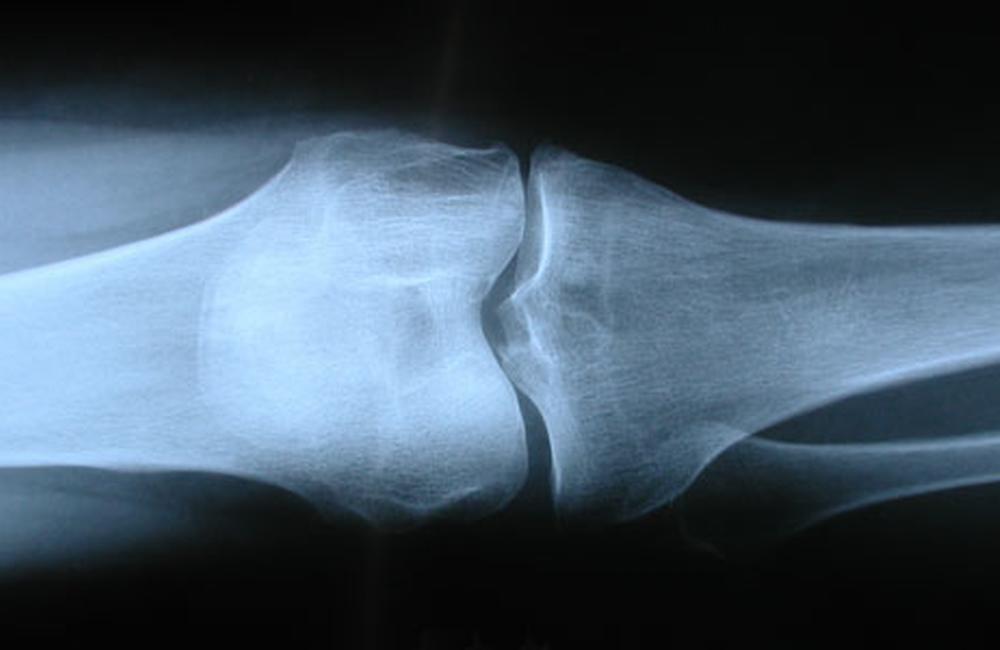
The relationship between HIV therapy and fracture risk is far from straightforward, US research presented to the International AIDS Society conference (IAS 2011) in Rome suggests.
An analysis including over 56,000 HIV-positive military veterans who received care between 1988 and 2009 failed to find any significant association between antiretroviral treatment and fragility fractures.
Incidence of fractures increased after the introduction of effective HIV therapy, but the researchers believe that this could simply be because more patients were surviving into older age.
However, when analysis was restricted to patients who received care after 1996, an association was found with tenofovir (Viread, also in the combination pills Truvada and Atripla) and lopinavir/ritonavir (Kaletra). Even so, the investigators stress that traditional risk factors such as smoking and diabetes were much more important.
It is now well known that bone mineral density is reduced in patients with HIV. The exact causes are controversial, but appear to include traditional risk factors, especially older age, HIV infection, and possibly therapy with some antiretroviral drugs.
The clinical significance of this reduced bone mineral density is also unclear. Some (but not all studies) have found that it is associated with an increased risk of so-called fragility fractures (a fracture that occurs from a fall from standing height or less, usually to the wrist, vertebrae or hip).
Investigators from the US Department of Veterans’ Affairs conducted a retrospective study involving patients who received care between 1988 and 2009.
Data were gathered on the incidence of fragility fractures, and the patients’ medical records were examined and information extracted on traditional, HIV-related, and antiretroviral-related risk factors.
Incidence of fractures increased from 1.61 events per 100 person-years in the pre-treatment era to 4.06 events per 100 person-years after the introduction of combination HIV therapy.
Fracture rates were significantly higher among men, smokers, individuals with diabetes, and those co-infected with hepatitis C virus (all p < 0.0001).
The first set of statistical analysis showed a significant association between fragility fractures and traditional risk factors including white race (p < 0.0001), older age (p < 0.0001), smoking (p = 0.003), lower body mass index (p = 0.007), and hepatitis C co-infection (p < 0. 0001).
Cumulative exposure to antiretroviral therapy was significant in univariate analysis (p = 0.02), but fell just short of significance in the adjusted model (p = 0.77).
An analysis of the entire cohort of patients found a significant association between fragility fracture risk and tenofovir therapy (p < 0.001), as well as treatment with Kaletra (p = 0.015). However, both associations ceased to be significant after controlling for traditional risk factors.
The investigators then restricted their analysis to people who received care after 1996, following the introduction of effective combination HIV treatment.
A significant association was found with tenofovir therapy, even after controlling for traditional risk factors, each year of treatment increasing the risk by approximately 12% (hazard ratio [HR] = 1.12; 95% CI, 1.02-1.21, p = 0.011).
After controlling for other risk factors, there was also a significant association with Kaletra, therapy with this drug increasing the risk of fragility fractures by 8% (HR = 1.08; 95% CI, 1.01-1.15, p = 0.026).
When the two drugs were used together, the risk of fractures was further increased.
Despite these finding, the investigators were circumspect about the association between antiretroviral therapy and the risk of fractures.
Most importantly, the risk associated with cumulative exposure to HIV therapy was modest when compared to those associated with traditional risk factors, especially white race, ageing and smoking.
They also suggest that the higher fracture rates in the treatment era, and the significant association with tenofovir and Kaletra, could simply be because people with HIV are living longer.
Although they believe that the large sample size was a major strength of their study, they also note a number of limitations. These include the retrospective design, and the fact that no information was available on the patients’ bone mineral density.
“Cumulative antiretroviral exposure likely does not account for the increased risk in the HAART era,” conclude the investigators.
Bedimo R et al. Osteoporotic fracture risk associated with cumulative exposure to tenofovir and other antiretroviral agents. Sixth International AIDS Society Conference on HIV Pathogenesis, Treatment and Prevention, Rome, abstract MOAB0101, 2011.
View the abstract on the conference website
View the presentation, with audio, on the conference website